Executive Summary: Venue Documentation
The most useful venue analysis starts after the flowers have faded and the album order has become a set of practical questions: which frames survived the room, which crops honored the architecture, and which delivery choices served the couple without flattening the day into a template.
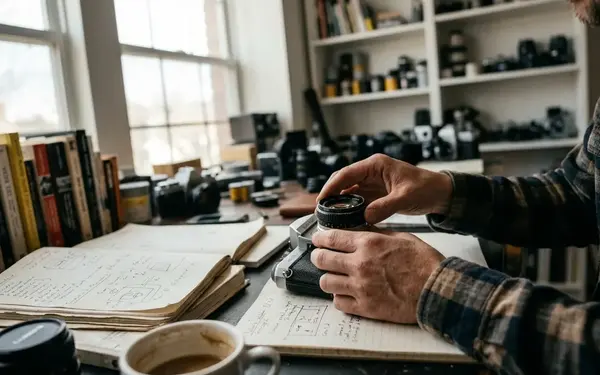
For this review, Faith West Photography established a retrospective case study framework by pulling physical archives from the 2000-2001 wedding seasons. The archive window spanned on the order of 36 to 42 months of early 2000s wedding documentation, with three couples selected as primary reference points: Shannon and Robert, Maria and Kevin, and Erin and Brian.
The point was not nostalgia. It was venue benchmarking under constraint.
These were medium-format wedding records made for couples who wanted romance, structure, and evidence in the same object. The square negative offered a beautiful field for composition, especially in historic interiors. It also created friction once clients needed standard 5x7 and 8x10 reprints, web galleries, and physical order deadlines.
What the archive was asked to answer
- How did historic Philadelphia-area venues shape exposure and composition choices?
- Where did square medium-format originals need manual trimming for client print sizes?
- How did scanned web galleries remain usable under early dial-up modem constraints?
- Which studio workflow protected the artistic intent of the original captures?
Under reported conditions, the workflow combined light-table negative review, hand-marked crop decisions, scanning for reprints at 300 dpi, web versions downsampled to 72 dpi, and strict catalog control before final client delivery. It was slow work. It was also exacting work, which is why the archive still has value as a technical record.
Main Point: These case studies show how Faith West Photography handled historic venue documentation when film originals, physical trimming, and compressed web delivery all had to coexist.
The Challenge: Architectural and Format Constraints
Historic venues rarely forgive lazy exposure. Dark wood, stained glass, brick terraces, formal gardens, and narrow interior transitions all ask the photographer to choose a priority before pressing the shutter.
Knowlton Mansion and Aldie Mansion presented different versions of the same problem: romance lived in the surfaces, but those surfaces did not meter evenly. Dark paneling absorbed light. Exterior brick reflected it. Window glass pulled the eye toward brightness. A flash-heavy solution would have made the record easier to expose and less faithful to the feeling of the rooms.
Medium format beauty, standard print pressure
The original negatives used a 6x6 medium-format square. That 1:1 frame gives portraits a calm center of gravity. It lets a couple breathe inside architecture. It also resists standard rectangular deliverables.
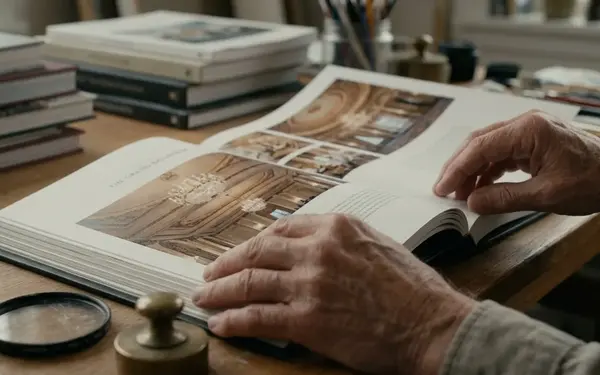
A 5x7 print asks for a 1.4:1 crop. An 8x10 print asks for a rectangular decision as well. In a plain reception hall, that cut might feel routine. In a mansion, it can remove the very detail that explains the place: a carved banister, a panel edge, a stained glass border, the depth of a doorway.
Here is the harder part. Early web galleries had to load for clients using dial-up modems, so gallery files were compressed under 45 kilobytes per file. The scan could not merely be small. It had to remain legible enough for ordering, recognition, and emotional recall.
Caution: A crop that flatters faces can still damage a venue record if it cuts away the architectural evidence that gives the photograph its atmosphere.
The format problem, then, was never only mathematical. It was editorial.
Methodological Solutions and Implementation
The studio’s solution began with refusal: do not let the print size make the first decision.
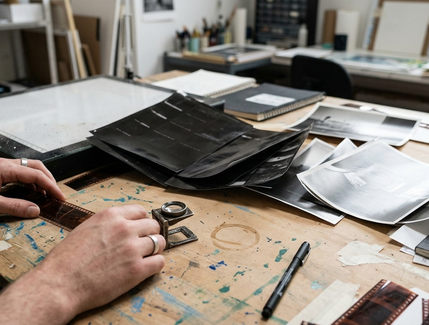
Print technicians manually evaluated each square negative on a light table and marked the crop after reading the frame’s subject balance, architectural context, and client value. The team considered masking the viewfinder in-camera to force a rectangular composition, but that approach would have surrendered too much of the medium-format negative’s spatial grace. This is the one failure worth naming because it clarified the method: batch-cropping 6x6 negatives to 8x10 without manual subject realignment severed architectural details in historic venues.
After that, the working rule became simple. Compose for the day. Trim for the deliverable.
Trimming from square originals
- Place the 6x6 negative on the light table and identify the emotional center of the frame.
- Mark essential architectural edges that should remain intact in the final print.
- Test the 5x7 crop against the 1.4:1 adjustment before committing to the reprint.
- Evaluate the 8x10 crop separately rather than assuming the same trim will work.
- Scan the approved physical reprint workflow at 300 dpi for print handling.
- Prepare a separate web gallery version downsampled to 72 dpi and compressed under 45 kilobytes per file.
The records show that the technical split between reprint scans and web-gallery scans was not cosmetic. It reflected two different jobs. The reprint file had to support a physical object. The web file had to help a client choose from home without waiting all evening for a page to load.
Early 2000s film-to-digital delivery specifications
Early 2000s Film-to-Digital Delivery Specifications| Original Format | Aspect Ratio | Deliverable Size | Web Compression Target |
|---|---|---|---|
| Medium Format Film | 1:1 square | 5x7 Print | N/A, physical reprint |
| Medium Format Film | 1:1 square | 8x10 Print | N/A, physical reprint |
| Scanned Gallery File | Adjusted from source frame | Web gallery preview | Under 45 kilobytes per file |
Client delivery controls
One small discipline mattered more than it looks on paper: the web preview never became the archive master. That separation protected visual fidelity, client usability, and the long-term record of the wedding.
Case Study 1: Shannon and Robert at Knowlton Mansion
The archived record places Shannon and Robert’s wedding on October 28, 2000, during a late afternoon ambient light window in the vicinity of 16:15 to 17:30. That timing gave the mansion a low, burnished interior mood. It also made the exposure choices less forgiving.
The team prioritized Knowlton Mansion’s intricate woodwork by metering for the shadows and allowing the stained glass windows to blow out naturally. That choice may sound counterintuitive if the goal is maximum detail everywhere. It was not. The goal was to preserve the room as the couple experienced it: warm, enclosed, and theatrical, with luminous glass acting as atmosphere rather than inventory.
Preserving architecture inside an 8x10 crop
In the Knowlton frames, trimming for 8x10 required special care around vertical wood elements. A centered crop could hold the couple neatly while slicing away the paneling that made the portrait belong to that mansion. A slightly offset crop often did better work. It kept the couple dominant and left enough carved structure to show place, depth, and scale.
Side-by-side review shows the practical difference between a face-first crop and a venue-aware crop. The first makes a pleasant portrait. The second keeps the marriage portrait and the mansion in the same sentence.
This is where venue benchmarking becomes more than a checklist. The benchmark is not whether every shadow opens. The benchmark is whether the final print still carries the room’s character after the studio has translated square film into a rectangular object.
Expert Tip: In dark historic interiors, protect the architectural edge closest to the couple before trimming. That edge often tells the viewer where the image was made.
For Shannon and Robert, the strongest 8x10 interpretations kept the woodwork legible and let the glass behave like light. The mansion remained present, not decorative.
Case Study 2: Maria and Kevin at Aldie Mansion
The archived record for Aldie Mansion, dated August 24, 2001, asked a different question: how do you move from a bright exterior world into an interior with drastically lower exposure values without making the album feel visually fractured?
The exposure notes place the transition from EV 14 outdoors to EV 6 indoors. That shift shaped both metering and sequencing. Outdoor portraits near bright brickwork and formal gardens needed restraint so the couple did not disappear into reflective surfaces. Interior frames needed a more patient shadow strategy so the mansion’s rooms did not collapse into murk.
Aldie versus Knowlton
Knowlton rewarded shadow priority. Aldie demanded transition control.
At Knowlton, the late afternoon interior work centered on dark wood and luminous glass. At Aldie, the photographers had to carry visual continuity between garden brightness and interior formality. The same studio standard applied, but the correction was not identical. The degree of shadow recovery required during scanning varied drastically between the dark wood interiors of Knowlton Mansion and the bright outdoor terraces of Aldie Mansion.
That distinction matters for couples comparing historic venues. A consistent service provider does not mean identical treatment. Faith West Photography applied the same technical standards across both sites, but the venue dictated the pressure points: shadow density at Knowlton, exposure transition at Aldie.
- Knowlton Mansion required careful preservation of interior woodwork in rectangular crops.
- Aldie Mansion required steadier movement between exterior brightness and interior depth.
- Both venues required manual crop judgment rather than automated conversion from square originals.
- Both galleries required low-weight web files that remained useful for client review.
The lesson is direct: consistency lives in the method, not in making every venue look the same.
Results, Client Delivery, and Scope Limitations
The final results were practical, archival, and client-facing. Couples received ordering access through a workflow built around physical materials, scanned previews, and manual reprint preparation. The studio also imposed a documented January 24 final deadline for client photo orders, which protected the labor-intensive darkroom, trimming, scanning, and cataloging sequence from becoming open-ended.
Deadlines can sound unromantic until the archive explains them. Orders required physical handling. Each crop required judgment. Web versions needed compression that did not replace the print file. The deadline was not a sales device; it was a production boundary around fragile, time-heavy work.

- Final print orders closed on the documented January 24 deadline.
- Physical negatives and reprints remained tied to catalog records.
- Web gallery files served preview and ordering functions, not master archive functions.
- The compiled portfolio was preserved under the 2003 copyright registration.
For physical photographic materials, long-term care also depends on storage, handling, and environmental discipline. The Library of Congress offers a useful reference on the preservation of physical photographic formats, which aligns with the broader principle at work here: a photograph is both an image and an object.