Documenting Ephemeral Art
Every love story is entirely its own, and your wedding photography should reflect that unique narrative. At Faith West Photography, I document authentic celebrations through real wedding studies, treating each event as a distinct study in light, emotion, and spatial design. The delicate curve of a ranunculus petal, the sweeping grandeur of a suspended canopy—these are not merely decorations, but the physical manifestation of a couple's romance. Luxury floral installations represent a significant investment of both capital and creative energy, yet they are inherently transient. By the end of the evening, the blooms will begin to wilt; by the next morning, the installation will be dismantled entirely. The core challenge lies in preserving the three-dimensional fidelity and color accuracy of these ephemeral masterpieces, specifically focusing on the intricate installations crafted by our partners.
Through ongoing, multi-year work, we have refined a careful method for capturing these transient works of art. The documentation strategy was established during a pre-wedding site walkthrough, where the photography team and the floral design partner mapped out the exact angles needed to capture the three-dimensional fidelity of the arrangements. We analyzed the architectural flow of the space, anticipating how light would interact with the organic textures of the botanicals. This summary outlines the technical approach used to capture these transient masterpieces, transforming fleeting botanical architecture into permanent visual records. The goal is to ensure that the emotional resonance of the floral design endures long after the physical elements have faded.
The Challenge of Floral Documentation in Dynamic Venues
Historic venues present a unique set of environmental variables that complicate botanical photography. Faced with the heavy tungsten wash typical of historic Philadelphia ballrooms, such as the Ballroom at the Ben, the team had to determine how to neutralize the ambient light without destroying the atmospheric mood the lighting design intended. The ambient illumination in these grand spaces is often designed for human comfort and romantic ambiance, not for the precise color rendering of delicate organic matter. Tungsten light inherently skews warm, casting a heavy yellow-orange veil over the environment that flattens the subtle color gradients of luxury florals.
Caution: Relying solely on venue uplighting—which frequently casts uncorrectable magenta or amber hues on white hydrangeas, compromises the integrity of the floral design and renders accurate post-production color grading nearly impossible.
In practical scenarios, timeline notes often show a narrow window, roughly 15 to 20 minutes, between the completion of the floral arch and the arrival of early guests. Within this narrow temporal boundary, the photography team must execute a complex series of captures. The difficulty of balancing the grand scale of architectural floral installations with the micro-textures of individual blooms becomes magnified under these dynamic conditions. Catering staff are finalizing table settings, lighting technicians are running test sequences, and the environment is in a state of constant, unpredictable flux. Capturing pristine, unobstructed views of the floral design requires rapid yet precise photographic execution. The photographer must anticipate the exact moment the setup is complete, moving with deliberate speed before the space becomes occupied by arriving attendees. This high-pressure environment leaves almost no margin for technical errors or equipment failures.
Methodological Approach and Technical Solutions
Precision in botanical documentation demands specialized optics and controlled illumination. The team initially considered using continuous LED panels for fill light, but rejected this approach because the panels lacked the output necessary to overpower the venue's ambient wash without blinding the setup crew. A more robust, instantaneous light source was required to freeze the scene, dictate the color temperature, and carve out the three-dimensional shape of the floral arrangements against the cavernous backdrop of the ballroom.
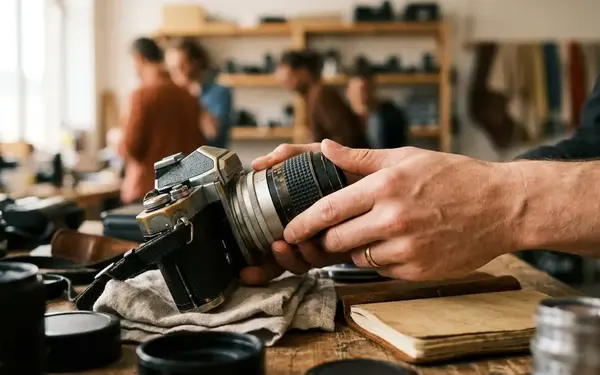
Instead, specific focal lengths and high-output strobes proved essential. A 105mm f/2.8 macro lens was used for isolating individual ranunculus petals, capturing the delicate veining and subtle color gradients that define the luxury floral experience. This macro perspective invites the viewer into the intimate, microscopic beauty of the design. At the same time, ultra-wide lenses provided the necessary spatial context, anchoring the floral installations within the grand architecture of the venue.
Off-camera flash equipped with 98 CRI modifiers ensured botanical color accuracy. Meeting strict color rendering index standards is non-negotiable for true-to-life reproduction. Lower quality light sources drop specific color spectrums, meaning the camera sensor never receives the data required to render deep reds or vibrant greens accurately. The physical environment itself acts as a secondary light modifier, complicating the illumination strategy. Adjusting strobe power and angle based on the reflectivity of the venue's floor material, such as dark mahogany versus white marble, allowed for strategic depth-of-field adjustments. Dark mahogany absorbs light and kicks back warm tones, requiring precise flagging, whereas white marble bounces light indiscriminately, necessitating highly directional modifiers to isolate key floral arrangements from distracting background elements.
Scope and Limitations of the Photographic Process
Even with advanced optical and lighting tools, physical and regulatory boundaries shape the final photographic output. When documenting a suspended floral canopy on the order of 12 feet within a space featuring a ceiling clearance in the vicinity of 14 feet, spatial restrictions dictate the methodology. The photographer had to shoot from the perimeter of the dance floor using a tilt-shift lens to correct perspective distortion, as standing directly underneath the installation was physically impossible. The geometry of the room forced a specific vantage point. By shifting the lens optics parallel to the image sensor, the photographer maintained the vertical lines of the surrounding architecture while capturing the full breadth of the canopy without the unnatural leaning effect typical of standard wide-angle lenses.
Expert Tip: When photographing suspended installations in rooms with low clearance, prioritize tilt-shift lenses to maintain architectural integrity without sacrificing the perceived scale of the floral design.
The temporal boundary of capturing florals at peak freshness before guest arrival and environmental degradation adds another layer of complexity. Organic matter responds rapidly to changes in temperature and humidity. The collective body heat of hundreds of guests, combined with the thermal output of venue lighting, accelerates the wilting process. Therefore, the installations look their absolute best for only a brief period immediately following completion.
Venue-specific conservation policies can also shape the final approach. Strobe-heavy documentation strategies are strictly prohibited in certain historic venues with delicate oil paintings or wall hangings, requiring a pivot to high-ISO ambient capture. This specific limitation fundamentally alters the approach to color fidelity in protected spaces, necessitating a heavier reliance on post-production color grading rather than in-camera lighting control.
Results: Archival Fidelity and Vendor Impact
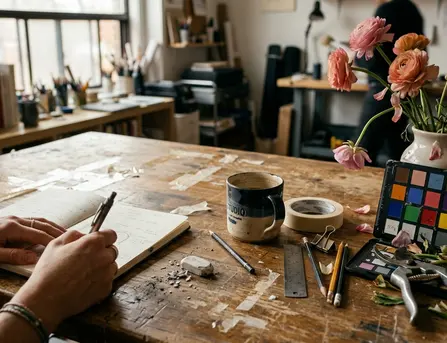
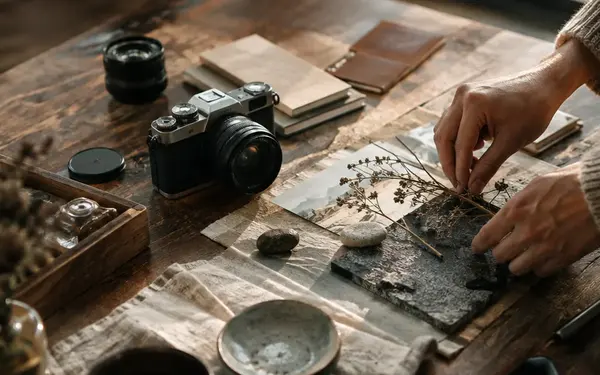
The aim of this careful process is archival fidelity. The final photographic portfolio must accurately represent the florist's original design intent, translating a three-dimensional, ephemeral experience into a two-dimensional, permanent medium. During post-production, the editing team referenced physical floral swatches provided by the florist to custom-calibrate the white balance, ensuring the final gallery reflected the exact botanical hues. Holding a physical ranunculus petal next to a calibrated monitor allows the editor to bridge the gap between digital interpretation and organic reality.
In practice, this precise documentation elevates the perceived value of luxury wedding investments. When clients can see the meticulous detail of their floral arrangements preserved with absolute clarity, the ephemeral nature of the investment is mitigated. The images serve a dual utility: acting as a permanent heirloom for the couple and an accurate portfolio asset for Beautiful Blooms as a premier service provider. Generations from now, these photographs will serve as the only tangible evidence of the environment that surrounded the couple as they exchanged their vows. For the floral designer, the images provide a vital tool for communicating their artistry to future clients.
Main Point: The intersection of technical lighting precision and physical color referencing guarantees a final product that honors both the emotional weight of the wedding day and the artistic integrity of the floral design.
By treating floral documentation as a specialized discipline within the broader scope of wedding photography, Faith West elevates the standard of visual storytelling. The resulting images stand as a testament to the collaborative effort between photographer and floral designer, ensuring that the beauty of the day remains vibrant long after the final bloom has faded.
Pre-Event Floral Documentation Checklist
- Synchronize timeline with the floral team to identify the exact completion window.
- Verify venue strobe policies regarding historic artwork or wall hangings.
- Prepare 98+ CRI lighting modifiers for accurate botanical color rendering.