Table of Contents
- The Art of the Detail
- The Philosophy of the Detail Shot
- Documenting Handcrafted Stationery
- Bridal Styling and Macro Photography
- Culinary Textures in Photography
- Cultural and Civic Ceremony Contexts
- Scope and Limitations of Detail Photography
The Art of the Detail
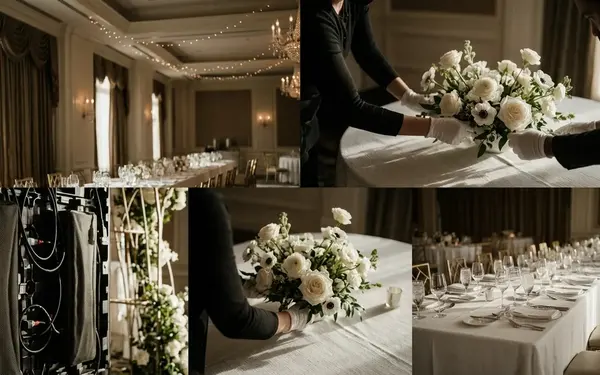
Every love story is entirely its own, and your wedding photography should reflect that unique narrative. Detail shots require an uncompromising focus on textures, colors, and composition to anchor the visual story of the day. Modern bridal styling trends demand precise macro photography to capture the delicate interplay of fabrics and metals. In cultural ceremonies, lighting and atmosphere call for distinct approaches, from the bright vibrancy of Hindu rituals to the shadowed intimacy of Jewish chuppahs.
To capture these elements authentically, the team decided to prioritize macro lenses during the pre-ceremony prep window to isolate textures before the ambient light shifts. This gives the foundational design elements of the celebration the dedicated focus they deserve, setting a cohesive visual tone for the entire gallery.
The Philosophy of the Detail Shot
The detail shot exists as a specialized photographic discipline focusing on the textures, colors, and composition of decor. It bridges the gap between portraiture and photojournalism, providing environmental context that grounds the emotional moments of the day. Over my 20 years of continuous wedding photography practice at Faith West Photography, I have refined this discipline to treat inanimate objects with the same compositional respect as human subjects.
Publications like The Knot and the Wall Street Journal routinely evaluate the quality of detail documentation in luxury events, recognizing that these images often define the published aesthetic of a celebration. Early in our studio's history, we initially considered using standard 50mm lenses for all decor to maintain a documentary feel, but rejected this approach because it failed to isolate the intricate weave of luxury linens and fine textiles. Shifting exclusively to dedicated macro optics for these elements transformed our ability to document the tactile reality of the event design.
Documenting Handcrafted Stationery
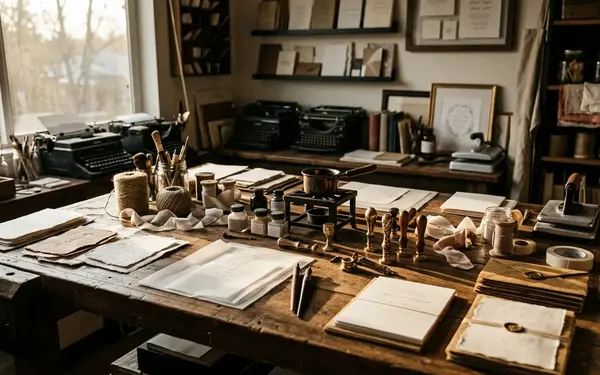
The save the date acts as the preliminary wedding announcement card that sets the visual tone for the entire guest experience. By the time the formal invitation suite arrives, couples have often invested heavily in handcrafted, non-uniform, and customizable watercolor stationery. Prominent stationery vendors and designers, including Winifred Paper (frequently featured on Style Me Pretty), Julie Song Inc., and Coral Pheasant, produce suites that are works of art in their own right.
Photographing these pieces requires a deliberate approach to styling. To capture the deckled edges of watercolor stationery, the styling team elevates the invitation suite on acrylic blocks to create natural drop shadows, rather than shooting flat against the styling mat. Lifting the suite by roughly a quarter to half an inch off the styling board introduces a three-dimensional quality to the paper goods.
Expert Tip: Adjusting macro focal planes based on the thickness of the stationery cardstock is essential. A slight tilt in the lens or the paper can throw critical typography out of focus when working at such close distances.
Bridal Styling and Macro Photography
Bridal fashion continually cycles through historical inspirations, demanding adaptable photographic techniques. The recent resurgence of off-the-shoulder gowns—a style popular since circa the mid-1800s that accentuates the neck and collarbone—has been championed by designers like Oscar de la Renta, Marchesa, and Inbal Dror. These garments rely heavily on the intricate layering of lace, tulle, and beading.
Capturing these materials requires a shallow depth of field to soften the background while rendering the threadwork in sharp relief. The same technique applies to floral appliqués on veils and floral barrettes, popularized by brands like BHLDN and hair designers like Sarah Winward.
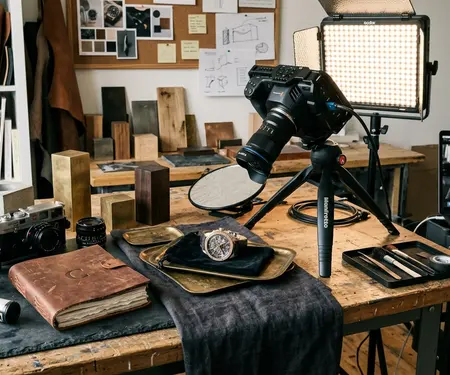
Lighting these delicate accessories presents a specific technical challenge. When photographing rose gold jewelry, an alloy created by mixing copper with yellow gold, and floral appliqués, the lead photographer angles the off-camera flash through a double-diffused softbox to prevent harsh specular highlights from blowing out the details. This diffusion preserves the warm, metallic luster without creating distracting reflections.
Culinary Textures in Photography
Luxury venues like the Kimmel Center frequently host receptions featuring complex cake designs that challenge standard lighting setups. Culinary details, often highlighted in wedding resources such as Ruffled and Style Me Pretty, require a nuanced understanding of surface reflectivity. The primary challenge lies in balancing the reflective nature of gold foil (metallic cake gilding) against the matte finish of traditional fondant.
Ruffled icing, a highly textured decoration style, demands directional light to reveal its depth. The lighting assistant positions a continuous LED panel at circa 45 degrees from the rear to rake light across ruffled icing, emphasizing the depth of the ridges without reflecting off the gold foil accents.
Caution: Flat lighting on white fondant can erase the ruffled texture, a frequent error when relying solely on on-camera flash. Always separate the light source from the lens axis to carve out the culinary details.
Cultural and Civic Ceremony Contexts
Different religious and non-religious formats dictate the pacing and focal points of the photography team. Civic ceremonies and vibrant cultural celebrations, such as Esha and Kevin's Hindu wedding at the Deerfield Country Club, often feature bright, saturated colors and dynamic movement that benefit from clean, even lighting and wider apertures to capture the scale of the mandap or altar.
Conversely, the atmospheric lighting required for a candlelit Jewish wedding chuppah demands a radically different technical approach. The environment is intentionally dark, designed to focus attention on the couple beneath the canopy.
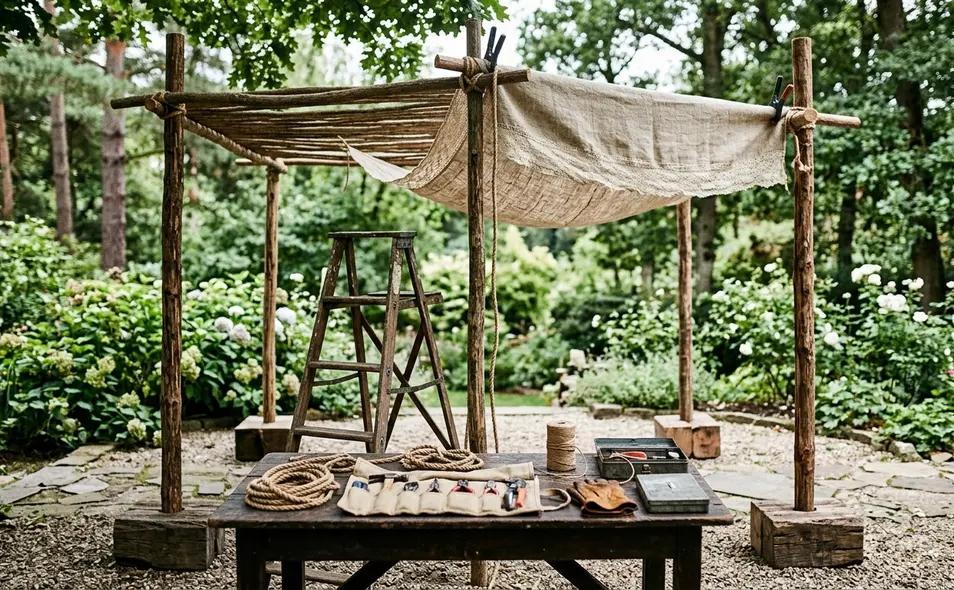
For candlelit chuppahs, the team relies entirely on the ambient glow of the candles, pushing the camera sensors to their limits to preserve the warm, intimate atmosphere rather than overpowering the scene with flash. In practical scenarios, ISO is pushed to the 3200 to 6400 range with shutter speeds hovering around 1/125th of a second. This preserves the authentic mood of the ceremony space while freezing the subtle movements of the couple.
Scope and Limitations of Detail Photography
While macro photography elevates the aesthetic presentation of a wedding gallery, it must be balanced against the core mission of documenting candid, emotional moments. Focusing too heavily on inanimate objects at the expense of human interaction dilutes the narrative power of the final collection.
Our experience suggests that a dedicated window on the order of 25 to 40 minutes for detail documentation prior to guest arrival provides a workable balance. The lead photographer allocates a strict timebox for macro details, transitioning the primary focus back to photojournalistic coverage the moment the first guest arrives in the ceremony space.
Main Point: Relying exclusively on ambient candlelight for macro detail shots severely restricts depth of field, often rendering only a fraction of an inch in sharp focus. This physical limitation of optics requires photographers to choose a single, critical point of interest when documenting low-light decor.
By defining the scope of detail photography within a standard wedding timeline, we ensure that the handcrafted stationery, culinary textures, and cultural elements are preserved without sacrificing the fleeting, authentic moments that make the day truly unforgettable.