The Fifteen-to-Twenty-Minute Rooftop Window
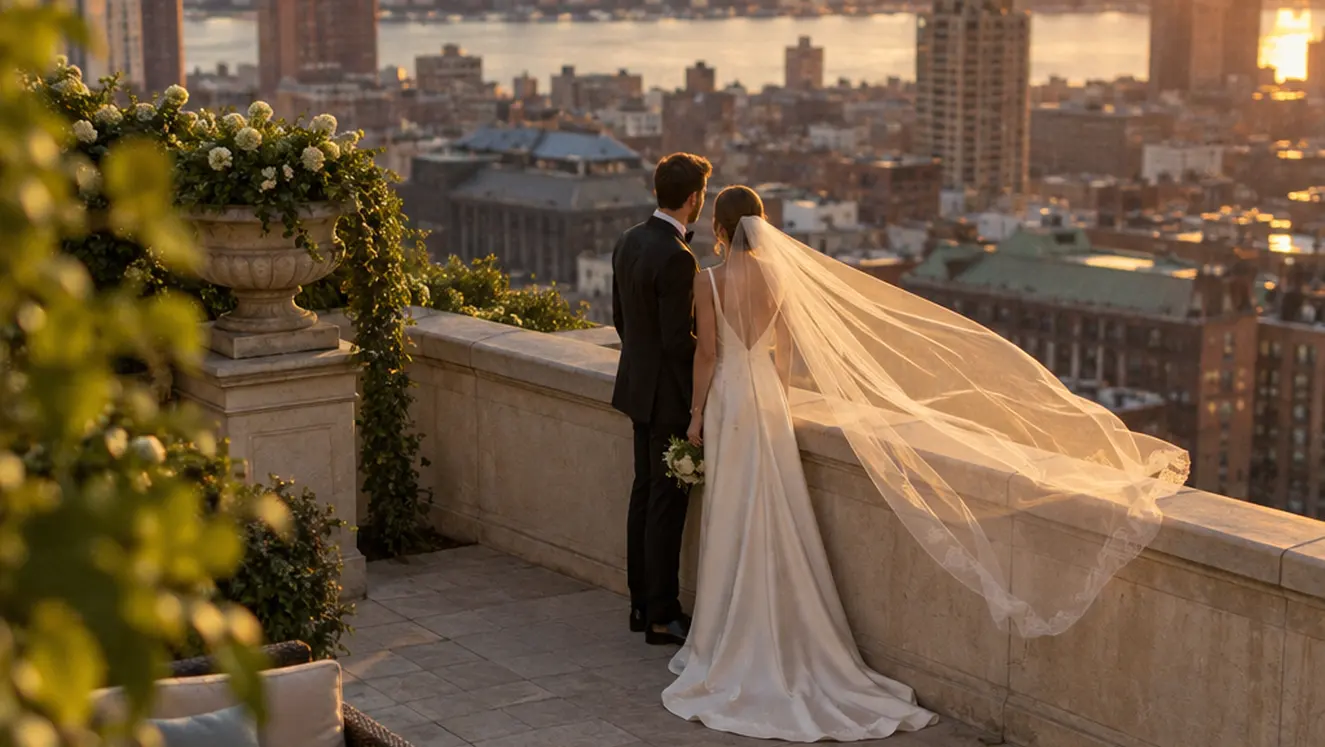
A 15-to-20-minute break during cocktail hour or early dinner service captures peak golden-hour light on an elevated terrace or roof while keeping the evening schedule intact. In a fast-moving reception across downtown Philadelphia venues, that compact block splits into 12 to 15 minutes of active photography and 5 to 8 minutes of round-trip vertical transit. Catering service rhythms offer two departure points: the final 20 minutes of cocktail hour, or the quiet lull immediately after the couple's dinner plates are cleared. Both slots avoid clashing with welcome toasts, table visits, or entrée delivery.
Five operational elements hold this compact portrait escape together:
- Calculating true building-shadow sunset: Measuring when the sun actually drops behind neighboring commercial towers.
- Clearing escorted elevator access: Locking down independent service transit so the wedding party bypasses lobby traffic.
- Anchoring veils and hair against rooftop gusts: Weighting delicate fabrics inside the enclosed vestibule before stepping outside.
- Cycling through three distinct lighting angles: Rotating in place through pre-marked focal lengths within a single terrace zone.
- Executing a seamless return to the guests: Re-bustling the gown during the descent to re-enter the reception effortlessly.
Timeline buffers protect the entire evening. Leaving the ballroom without a hard return cut-off can stretch a quick roof trip into an unintended 35-to-45-minute absence once couples are stopped by well-wishers in the foyer. Treating the exit as a timed transfer ensures the couple gets dramatic skyline portraits and still experiences their own party.
True Rooftop Sunset and Building-Shadow Timing
A glowing Tuesday evening atop a Center City ballroom illustrates the urban horizon trap. The local weather forecast lists official horizon sunset at 7:45 p.m., yet at 7:15 p.m., a neighboring glass high-rise slices across the western sky and drops the entire masonry roof deck into flat, cool shade. Standard weather-app sunset times do not account for this early loss of direct light.
Dense downtown corridors create a distinct structural sunset. Adjacent commercial towers or deep stone parapets can block direct sunlight 18 to 35 minutes before the official horizon sunset. Rather than trusting a regional forecast, production teams pair 3D sun-path mapping tools with an on-site compass check during the venue walkthrough to measure the elevation angle of western obstructions.
Skyline Shadow Check: Pull the couple from the reception floor near 30 minutes prior to the structural shadow cutoff. This buffer allows for vertical travel so the couple can step onto the roof while the sun sits 4 to 8 degrees above the obstructing roofline.
At that 4-to-8-degree elevation, the light clears neighboring concrete ledges while sitting low enough to wrap subjects in soft, directional warmth. How much earlier does the shadow line creep across the terrace when an autumn wedding moves from early September to late October?
Escorted Roof Access and Elevator Travel Buffers
Vertical transit in multi-story historic hotels and commercial buildings quietly consumes wedding timelines. Waiting for standard passenger cars packed with arriving guests and navigating keycard security zones can add 5 to 8 minutes of transit time in each direction across a 10-to-25-story property. Additionally, heavy fire-stairwell doors leading to upper roof decks can latch from the inside, threatening to lock an unescorted group out of the main building.
The Five-Minute Pre-Departure Staging Protocol
A coordination checklist with the event manager helps reduce vertical delays:
- Assign a dedicated operations escort: Secure a staff member equipped with master keycards, mechanical roof keys, and elevator override fobs.
- Hold the service car early: Have the escort meet the lead photographer at the service elevator bank 5 minutes before the scheduled pull time with the cab locked on independent service mode.
- Stage a direct hallway sweep: Escort the couple straight from the ballroom side exit or lounge into the held elevator cab, bypassing the main guest foyer to avoid hallway conversations.
- Post a threshold guard: Keep the venue escort stationed inside the upper roof access door so the team retains access to the building.
One structural constraint affects older urban properties: in historic buildings equipped with only a single freight elevator shared with the catering kitchen, vertical transit may be unavailable during the 15-minute window prior to first-course plating when hot cabinets are moving between floors. Scheduling the roof departure either before hot-box transport begins or after the first course hits the tables avoids a bottleneck in the service corridor.
Securing Veils, Trains, and Hair Against High Gusts
Open terraces and elevated roofs generate their own distinct microclimate. Updrafts shearing over masonry parapet edges can produce gusts an estimated 10 to 18 mph higher than the breeze felt on street-level sidewalks moments earlier. Stepping through the exterior door unprepared allows those sudden gusts to whip cathedral-length tulle across beaded bodices and pull loose tendrils across the face within seconds.
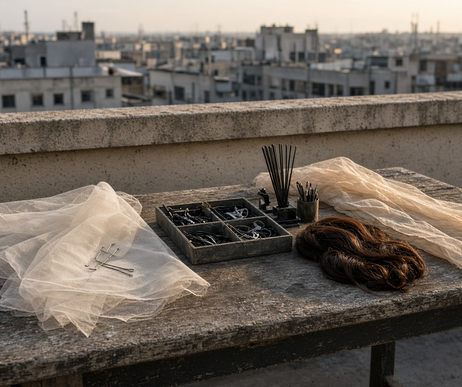
All garment adjustments, train un-bustling, and hair pinning happen inside the enclosed roof stairwell vestibule before anyone cracks the exterior door. A calm two-minute preparation inside the airlock protects the styling across the entire outdoor sequence.
Securing wedding details for rooftop wind relies on discreet hardware:
- Rare-earth magnetic weights: Clip two to four small pearl- or crystal-faced magnetic veil weights evenly along the bottom lace hem to keep the fabric draped smoothly along the floor.
- Heavy-gauge crown anchoring: Drive three 3-inch heavy-gauge U-pins diagonally through the veil comb directly into the structural braid or low bun so upward gusts cannot lift the anchor point.
- Perimeter flyaway control: Smooth stray hair along the part line inside the vestibule before the wind catches loose strands.
Keep the veil weighted and tucked during the first 10 minutes of shooting to secure clean, structured portraits where both faces and custom suiting remain completely visible. During the final 2 to 3 minutes on the deck, pull the magnetic weights from the hem and release the tulle into the crosswind for controlled, sweeping movement across the frame.
Cycling Through Backlit, Side-Lit, and Wide Architectural Angles
Once the exterior door opens, wandering the full perimeter of a sprawling roof deck searching for backdrops wastes precious light. Instead, pre-marking three tight shooting clusters within a radius of around 25 feet allows the couple to rotate in place while the camera cycles through three distinct focal lengths.
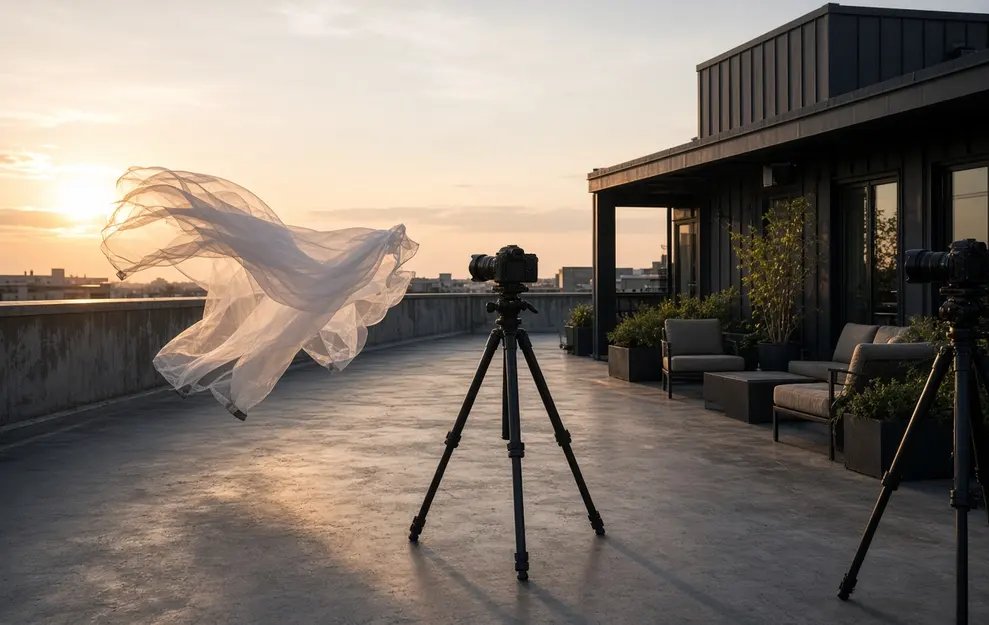
Dividing the active 12-to-15-minute session into three 4-to-5-minute intervals reduces hesitation:
Station One: Intimate Backlit Rim Light (Four Minutes)
Position the couple with their backs directly to the low western sun and shoot tight at 85mm. The sun catches the edges of the veil and shoulders in a warm halo while shielding their eyes from direct glare, creating quiet, romantic close-ups in the first four minutes.
Station Two: Sculpted Directional Side-Light (Four Minutes)
Pivot the couple 90 degrees within the same terrace zone and switch to a 50mm focal length. Letting the low golden rays rake across the couple at an angle carves out the dimensional relief of Chantilly lace, silk jacquard, floral boutonnieres, and tailored wool lapels.
Station Three: Wide Architectural Skyline (Four Minutes)
Step back with a 24mm to 35mm lens for the final four minutes, guiding the couple along the ornate stone balustrade or ironwork parapet. Here, the warm architectural shadows stretch across the terrace tiles while the city skyline anchors the background.
As the sun touches the neighboring tower roof, the couple steps back inside the quiet service vestibule for an approximately 90-second reset. The second shooter and planner swiftly re-secure the French bustle, unclip the veil comb, and press two chilled glasses of champagne into the couple's hands. When the heavy brass elevator doors slide open onto the reception floor, the couple walks straight into the warm hum of cocktail hour before a single guest realizes they were gone.