Three Conditions That Shape the Morning Gallery
How does the physical environment of a getting-ready room dictate the aesthetic quality of morning wedding photography?
The success of morning photography relies entirely on three factors: unobstructed directional window light, strict clutter management, and padded timeline logistics. These conditions govern the first 60 to 90 minutes of coverage. They determine where people can stand, how skin tones render, whether details receive careful attention, and how freely the photographer can respond to unscripted exchanges.
Room evaluation begins at the doorway. Locate the primary light source first, then establish a boundary between the preparation zone and the staging area. That simple division dictates the visual flow of the morning. Hair and makeup remain close enough to the window for clean illumination; luggage, food containers, garment bags, and discarded packaging move elsewhere.
Luxury details cannot rescue a room that works against the camera. An heirloom ring may carry generations of meaning, yet it still needs a stable surface and directional light. Even a silk robe loses its softness under mixed lamps. A quiet exchange between a parent and the person getting married disappears when attendants must continually cross the frame to reach their belongings.
The Morning Test
Stand at the room entrance and ask three questions: Where is the cleanest window light? Where will preparation happen? Where will everything unrelated to photography disappear?
This is the practical distinction between a room that merely holds people and one that supports documentary photography. The latter gives emotion enough physical space to become visible.
Windows, Wall Color, and Usable Floor Space
Historic Philadelphia venues often present a seductive first impression: carved molding, tall ceilings, patterned walls, and a sense of ceremony already embedded in the architecture. The working question is more exacting. Does window light reach the center of the room, or does it fade within a few feet of the glass?
The window-to-depth ratio matters because preparation rarely stays pressed against one wall. Artists need room for chairs and tools. Attendants move between mirrors, garments, and personal belongings. The photography team needs lateral camera positions rather than a single narrow lane.
Windows facing true north or south generally provide the most consistent natural light and reduce the disruption caused by harsh, direct sun. The underlying principles of daylighting and directional illumination are especially useful here: window placement, room depth, and reflective surfaces affect how far usable light travels.
Wall color then modifies that light. Neutral, pale walls behave like broad reflectors, returning relatively clean illumination toward faces. Deep green, red, or blue walls can introduce visible color casts, particularly where window light strikes the wall before reaching the subject. Mixed artificial lighting compounds the problem by adding another color temperature to the scene.
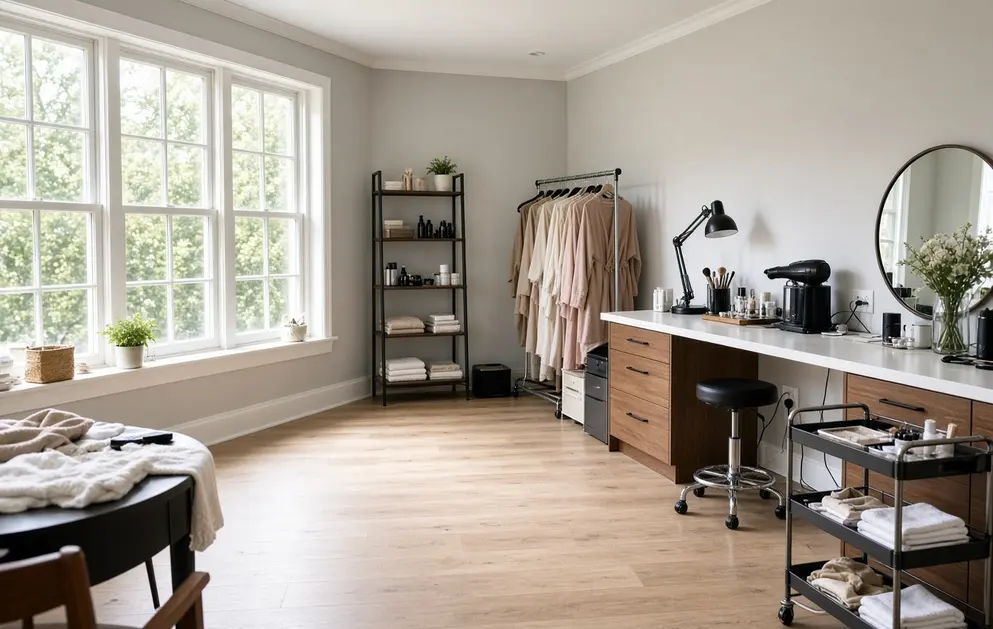
For planning purposes, a preparation suite should provide at least 400 to 450 square feet. That range allows the bridal party, hair and makeup artists, and photography team to work without severe spatial compression. The shape of the room still matters: a long, narrow room may technically meet the area benchmark while offering little usable width.
Standard double-bed hotel rooms frequently fail this test. The beds consume most of the floor plate, leaving a makeup chair wedged between furniture and a narrow aisle for everyone else. During planning, convenience initially makes these rooms attractive. A closer spatial review usually moves the search toward a suite with fewer fixed obstructions.
Suite Benchmark
Give priority to 400 to 450 square feet, true north- or south-facing windows, light neutral walls, and a clear path between the window, dressing position, and doorway.
A Controlled Surface for Rings, Paper, and Heirlooms
Detail photography begins before the photography studio arrives. Remove tags and plastic packaging at least 24 hours before morning coverage. Replace modern plastic hangers, gather the invitation suite, and place rings and family heirlooms together so nobody has to search through luggage while the schedule advances.
Upon arrival, the photographer can then sort the collection by scale, texture, and personal significance. Flat-lay work benefits from a nearly 3-by-3-foot dedicated surface near the window. That area must remain undisturbed while the composition is adjusted and macro photographs are made.
Why Details Need Their Own Zone
Macro photography records tiny reflective surfaces, engraving, fabric weave, and paper texture. Even slight movement of the table or an unexpected shadow can interrupt the sequence. A reserved surface lets the photographer refine spacing and perspective without competing with coffee cups, curling irons, or a procession of people retrieving bags.
The wider room follows a “zone defense” clutter protocol. Designate one corner, closet, or adjoining space for luggage, garment bags, food, and packaging. Keep the principal window area pristine. In a historic Philadelphia hotel suite, this division protects both the architectural character and the human activity unfolding within it.
Morning Preparation Suite Staging Protocol
- Clear all luggage and garment bags from the primary window areas.
- Remove plastic packaging, tags, and modern plastic hangers from garments.
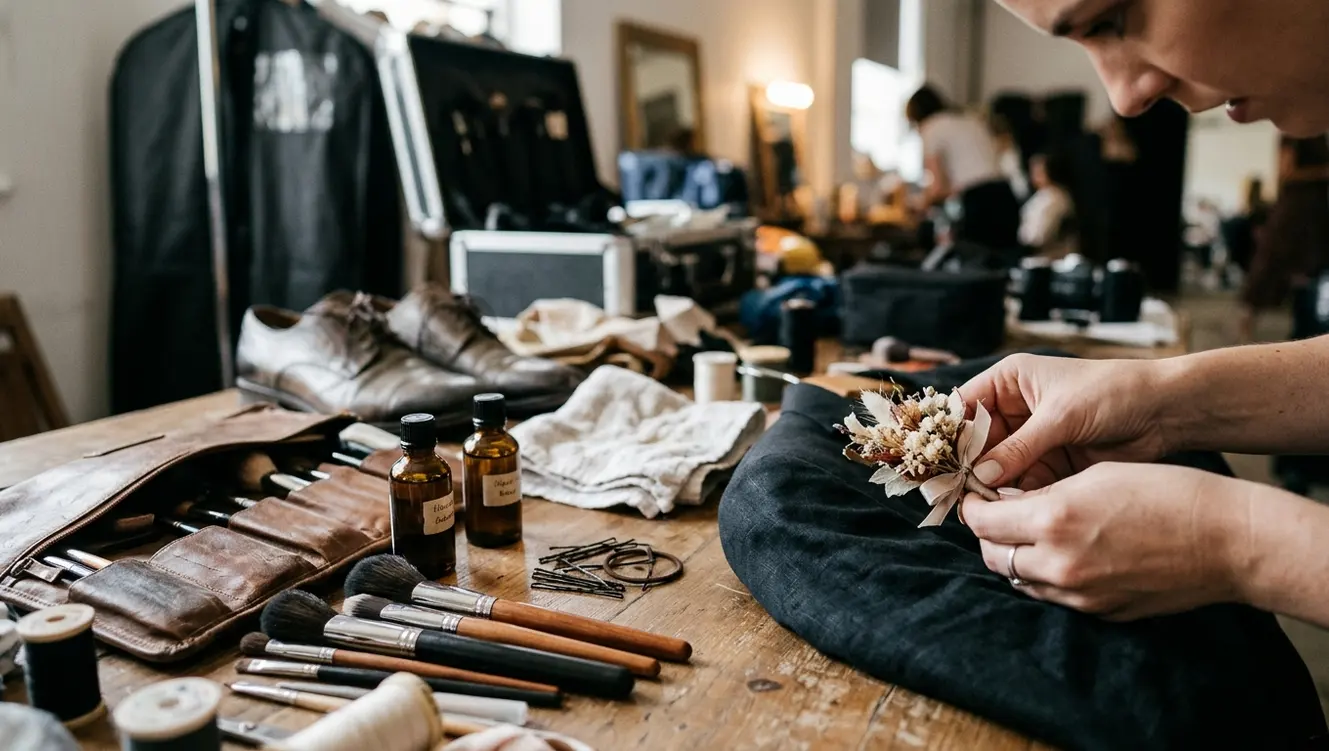
- Consolidate rings, invitation suites, and family heirlooms beside the reserved detail surface.
- Protect a nearly 3-by-3-foot area near natural light for flat-lay and macro photography.
- Place food, empty glasses, chargers, and styling cases inside the designated clutter zone.
The aim is visual coherence, not sterility. A handwritten note on a dressing table may belong in the story. A half-open shipping box rarely does. Thoughtful staging leaves meaningful evidence in place while removing objects that distract from it.
Heirloom Priority
Assign sentimental objects to one trusted attendant before the morning begins. The photographer gains immediate access, and irreplaceable pieces remain under clear supervision.
Working Backward from the First Look
The most consequential scheduling choice often appears deep inside the hair and makeup rotation. Place the lead subject second-to-last rather than last. This position allows styling to finish close to photography time while preserving another appointment as a cushion if the rotation slips.
The timeline should be built backward from the first look or ceremony departure. From that fixed point, reserve dressing time, individual portraits, interaction with attendants or parents, detail coverage, and movement through the building. Add a strict 30-minute buffer rather than assigning every minute to visible activity.
The photography team typically arrives during the final 30 to 45 minutes of preparation. This timing captures finishing touches: a final pin placed into the hair, lipstick refined at the mirror, cuff links fastened, or a veil lifted from its box. Arriving at the raw beginning of styling spends valuable coverage on a process that may offer little variation for an extended period.
The Last-Chair Risk
When the bride or groom sits last, every earlier delay transfers directly to portraits and departure. The room then changes temperament. Questions accelerate, attendants begin packing around the subject, and the photographer loses the quiet interval intended for dressing.
One limitation deserves direct attention: this synchronization strategy breaks down when a single styling artist handles more than four attendants. The rotation can push the lead subject’s finish beyond the scheduled photography window even with careful sequencing. In that situation, the schedule or staffing plan must change before the wedding morning.
I treat the first look or departure time as the immovable reference point, then test every preparation task against it. That method exposes timeline collapse before it reaches the room.
Timing Safeguard
Schedule the lead subject second-to-last, target photography arrival for the final 30 to 45 minutes of styling, and preserve the full 30-minute buffer.
Who Belongs in the Room During Final Dressing
A preparation suite can meet every architectural benchmark and still produce tense photographs when too many people enter it. Occupancy changes the emotional register of the morning as surely as light changes exposure.
During the final hour, limit the room to four to six essential people. This group may include the lead subject, selected attendants or family members, the necessary styling artist, and the active members of the photography team. The exact composition follows the planned relationships in the gallery, but every person should have a reason to remain.
Extended family, additional vendors, and early visitors increase foot traffic. They block camera angles, interrupt sightlines, and introduce practical questions at the point when the person getting married needs a calm sequence of manageable decisions. Even affectionate guests can alter a private exchange simply by gathering around it.
The planner and photography team can establish an essential-personnel protocol before final dressing begins. A gentle room reset clears empty cups, closes luggage, and guides nonessential visitors toward another meeting place. This intervention works best when communicated in advance rather than improvised in front of guests.
Quiet Produces Better Documentary Access
With fewer bodies in the suite, the photographer can move between wide environmental frames and close observations without repeatedly asking people to shift. More importantly, conversation settles. A parent can pause while fastening a button. An attendant can read a letter without a queue forming behind the camera.
These moments carry the anticipation that gives morning coverage its narrative role. Frantic coordination creates pictures of coordination. A controlled room leaves space for tenderness, concentration, and the brief silences that precede the ceremony.
Doorway Rule
During final dressing, admit only people who contribute to the moment or appear intentionally within it.
Book the Room for the Photographs It Can Hold
The final consultation should compare the venue’s default holding room with dedicated natural-light suites. Judge each option by window orientation, room depth, wall color, floor area, privacy, and the ability to isolate clutter. Geographic convenience comes after those criteria.
If the primary venue or hotel block cannot supply a suitable suite, secure an off-site location for a minimum four-hour block before departure. The longer reservation supports styling, detail organization, final dressing, portraits, and an orderly exit without forcing each activity into the same hurried interval.
This choice also clarifies responsibility. Faith West Photography, as the service provider, can plan camera positions and arrival timing around a defined environment. Faith West, the lead photographer, can then devote the opening coverage to relationships and visual continuity rather than rearranging an undersized room while the schedule runs.
A superior physical environment returns more value to the final gallery than any individual prop or accessory. It supports every frame made there, from the invitation suite beside the window to the final portrait before departure. The room becomes part of the story without overpowering the people inside it.
Book one expansive, private, natural-light preparation suite for its photographic potential, even when that means leaving the venue or hotel block for the morning. That single decision turns preparation from a logistical obstacle into a beautifully documented first chapter.