Building One Story Across Forty-Eight Hours
How do you map a cohesive visual narrative across a 48-hour, multi-venue South Asian-American wedding weekend? The plan depends on strict hour-by-hour timeline mapping, strategic gear staging between venues, and a dual-narrative approach to gallery curation.
This framework addresses a particular kind of celebration: an intimate Friday evening of Mehndi and Sangeet traditions followed by a large Saturday ceremony and reception in the Philadelphia suburbs. Once attendance reaches the 350-to-400-guest range, photography logistics begin to shape the visual record. Travel, access, lighting construction, family groupings, and overlapping rituals all compete for the same finite intervals.
Anchor the Weekend Backward
The most stable planning method begins with the Saturday sunset hour. From that fixed point, calculate backward through the couple’s evening editorial session, formal family portraits, the ceremony, the Baraat, preparations, and drive times from the Main Line suites to the primary estate venue. Friday coverage then connects to this structure rather than operating as a separate assignment.
I read this backward map as both a schedule and an exposure-risk document. It reveals where late transportation could consume portrait light, where photographers may need to separate, and when equipment must leave one venue before the principal coverage team does.
The Twenty-Five-Mile Boundary
The model assumes that Friday and Saturday venues sit within a 25-mile radius. A longer transfer requires a dedicated travel buffer and can compress the evening portrait window.
That geographic threshold matters around suburban Philadelphia, where a hotel ballroom, preparation suite, and outdoor estate may appear close on a map while their loading access and traffic patterns tell a more complicated story. The visual plan becomes credible only when movement is treated as part of coverage.
From Mehndi Detail to Sangeet Velocity
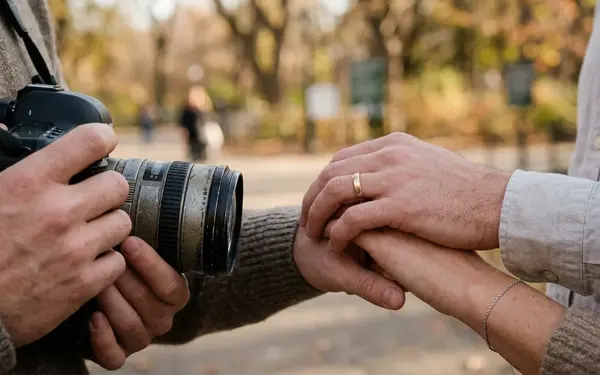
Friday begins at hand level. The Mehndi calls for close observation: the artist’s fine lines, drying paste, jewelry lifted away from the wrist, and relatives leaning inward to inspect the design. These frames gain strength from proximity and patience. They establish the tactile vocabulary of the weekend before the room opens into dance.
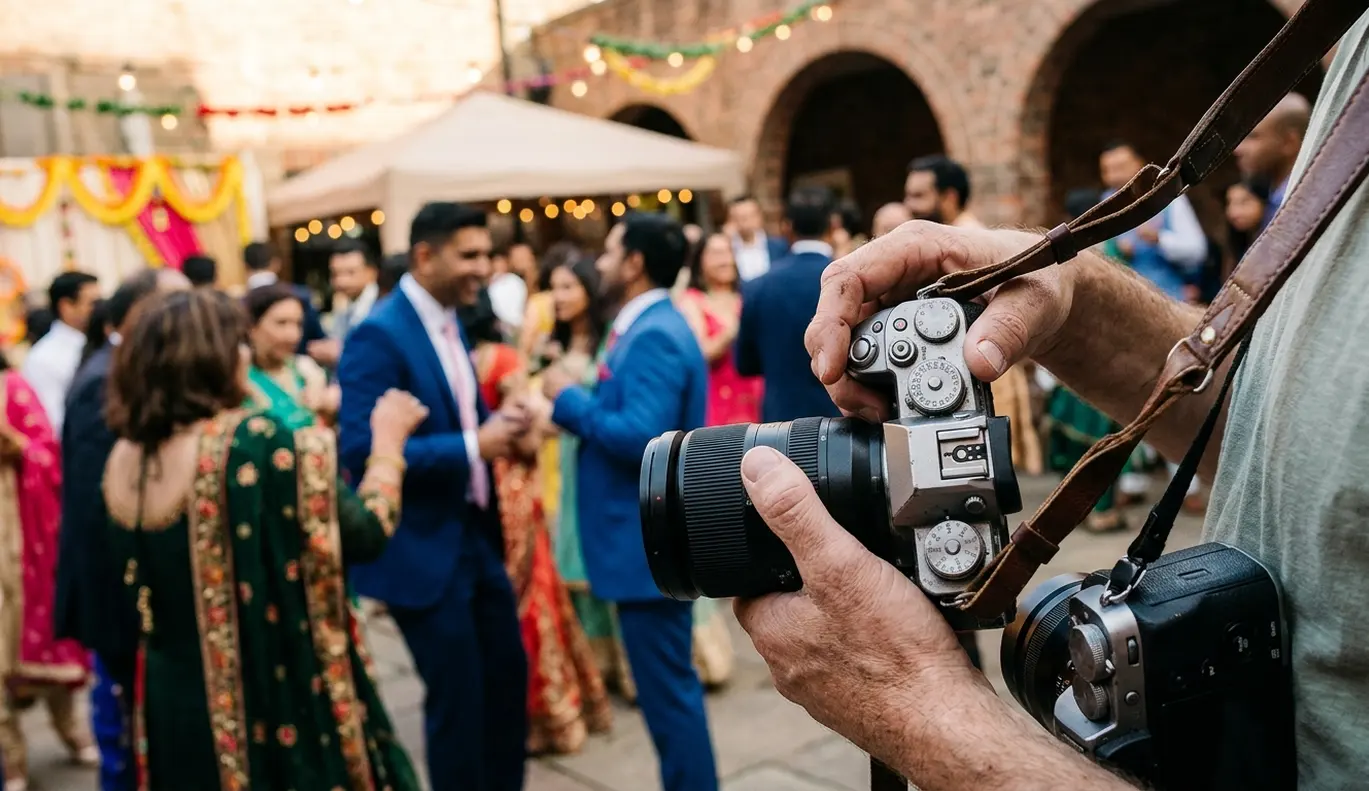
The Sangeet reverses that scale. Performers cross the floor rapidly, garments flare during turns, and family reactions often matter as much as the choreography. A photographer must move from detail-led coverage to a wider documentary method without making the resulting sequence feel like two unrelated events.
Holding Color While Freezing Dance
Fast prime lenses initially appeared capable of preserving the atmospheric light during the performances. In practice, rapid spinning produced unacceptable motion blur. The solution was a synchronized, four-point off-camera flash deployment, with tungsten-gelled light shaped to remain sympathetic to the room rather than bleaching away its warmth.
A minimum shutter speed of 1/250th of a second provides the working floor for dance coverage. The four lights create overlapping zones, allowing a performer to move across the floor without falling abruptly from illumination into darkness. Camera exposure still retains the ambient background, including decorative color and the visible audience, while the flash arrests the decisive gesture.
- Mehndi priority: hands, pattern progression, touch, jewelry, and close family attention.
- Sangeet priority: complete movement, layered groups, audience response, speeches, and transitions between performers.
- Continuity priority: recurring relatives and gestures that can carry the viewer from intimate preparation into collective celebration.
The practical goal is dimensionality. Flash should clarify motion while the existing light continues to describe the venue’s mood. When both sources remain visible, saturated textiles keep their depth and the dance floor still belongs to the celebration.
Saturday’s Baraat, Mandap, and Portrait Clock
Saturday coverage has a harder edge because every delay travels forward. Morning preparations, the Baraat, the ceremony, family portraits, the editorial session, and the reception form a chain. Each link needs a defined photographic purpose before the day begins.
A Working Order for the Primary Day
- Morning preparations: divide attention between personal details, dressing sequences, immediate family interactions, and the movement toward departure. The frame should feel calm even when the schedule is dense.
- The Baraat: reserve a 90-minute dedicated window. The coverage team needs room for the entrance, dancing, procession scale, family welcomes, and reactions at the destination.
- The ceremony: establish sightlines to the couple, ritual objects, officiants, and immediate family beneath and around the Mandap.
- Formal portraits: work from a predetermined family grouping order so that key relatives can enter and leave efficiently after the ceremony.
- Evening editorial session: protect the sunset-led interval for portraits that connect the ceremony’s emotional intensity to the reception’s polished atmosphere.
For guest counts exceeding 350, the plan calls for a minimum three-photographer deployment. The value lies in divided responsibility rather than simple volume. During the Mangal Phera, Faith West, the lead photographer, remains committed to the couple’s micro-expressions. A second photographer roams the Mandap perimeter specifically for parental and sibling reactions. The remaining coverage position preserves the broader ceremonial context and guest perspective.
Mandap Sightlines
Ritual and reaction deserve simultaneous coverage. Repositioning after an expression begins usually means the emotional frame has already passed.
The afternoon transition requires equal discipline. Family portraits benefit from clear grouping logic, but speed alone cannot dictate them. Elders need respectful placement, both families need visible prominence, and the couple needs enough energy left for the evening session. The timeline should therefore identify which portraits carry ceremonial importance and which combinations can be made elsewhere in the weekend.
By the time reception doors open, the visual register can change again: cleaner lines, controlled posing, darker backgrounds, and a more editorial treatment of attire. That change should feel like an intentional chapter, not a hurried repair after ceremony delays.
Leapfrogging Light Between Philadelphia Venues
A Friday hotel ballroom and a Saturday outdoor estate impose different lighting and access demands. Packing every stand, modifier, battery, and camera into one continuously moving unit creates a fragile system. One delayed vehicle can hold the entire reception setup hostage.
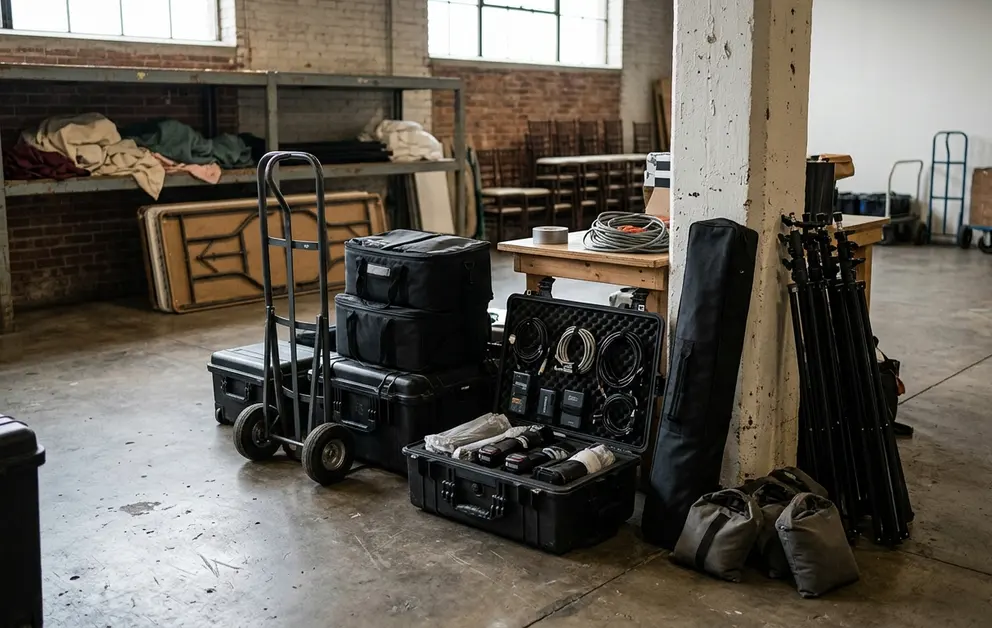
The stronger framework uses leapfrog staging. While the principal photographers remain at the ceremony site for family coverage and golden-hour portraits, the lighting assistant departs early. A 45-minute advance staging window allows the assistant to build and test the reception strobes before the rest of the team arrives.
Separate Active and Staged Kits
The ceremony team retains the cameras, lenses, and portable lighting needed to finish its assignment. Reception equipment travels as a clearly separated package, ready for immediate construction. This distinction prevents a critical stand or trigger from remaining buried in a case still attached to the portrait team.
Battery management follows the same event-block logic. Active batteries stay with the equipment currently in use; charged reserves remain organized for the next venue. Used units move into a distinct return group so they cannot re-enter circulation by mistake.
Memory handling also follows the narrative structure. Cameras write simultaneously to dual slots using 128GB cards, and cards are swapped at the end of each major event block. Mehndi, Sangeet, preparations, Baraat, ceremony, and reception material therefore acquire physical boundaries before post-production begins.
- Keep exposed cards on the photographer’s person or in controlled storage.
- Separate blank, active, and completed media during every venue transfer.
- Confirm that reception lighting has fired successfully before the assistant reports the setup ready.
- Restrict unattended equipment to secured rooms or supervised staging areas.
These protocols serve a romantic purpose beneath their technical surface. They protect the couple’s portrait time from becoming an equipment delay and allow the photography studio to preserve attention where it belongs: on the unfolding relationships.
Editing Two Family Histories Into One Gallery
The final gallery must honor two heritages without reducing either to an illustrative aside. Equal visual weight does not require mechanically identical image counts. It requires comparable narrative care: recognizable key figures, complete ritual sequences, meaningful reactions, and enough connective imagery for each family to understand its place in the weekend.
Five Chapters, One Emotional Pace
A delivery of 800 to 1,200 final images can overwhelm a viewer when presented as one uninterrupted stream. Five chronological folders provide a navigable architecture:
- Friday Traditions
- Saturday Preparations
- The Baraat
- The Ceremony
- Evening Celebrations
Within those chapters, sequence carries as much meaning as selection. Western formalities and South Asian rituals receive deliberate visual balance. Candid family interactions sit between highly stylized editorial portraits, preventing the gallery from hardening into a succession of posed highlights. A glance between siblings can release the tension after a formal portrait; an elder’s reaction can restore human scale after a wide ceremonial frame.
Culling should also account for relational coverage. When one side of the family appears repeatedly through close reactions and layered interactions, the other should receive equivalent narrative attention where the source material allows. The review asks who appears, how they appear, and whether their emotional role remains legible across the complete weekend.
Faith West Photography, as the service provider, can then deliver a gallery that moves with clarity from pigment and performance to procession, ritual, portraiture, and evening celebration. The chapters make the archive easier to enter, while the internal pacing keeps the weekend emotionally whole.
Which elements of your dual-heritage celebration require the most dedicated timeline focus to ensure neither family’s traditions are rushed?