Table of Contents
- Why Sentimental Objects Belong on Live Reception Tables, Not Isolated Styling Boards
- The Villanova Inventory: Cataloguing Twelve Pieces Across Three Generations
- Securing Forty-Five Uninterrupted Minutes With the Planner and Florist
- The Eight-Hour Styling Sequence From Bridal Hem to Cake Cutting
- Controlling Specular Highlights on Sterling Silver and Silk Under Tent Canvas
- Build Your Three-Column Heirloom Manifest Thirty Days Before the Rehearsal
Why Sentimental Objects Belong on Live Reception Tables, Not Isolated Styling Boards
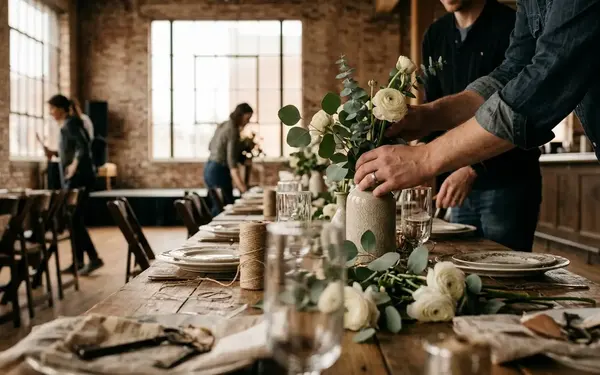
Inherited wedding objects achieve true archival weight only when photographed in functional use across the actual reception tablescape. Isolating a grandmother's silver or hand-loomed textiles on sterile morning flat-lay boards strips away their history and scale. When an artifact rests beside active beeswax tapers, estate linens, and living garden roses, the photograph records a continuation of family history rather than a static museum catalog entry.
Integrating twelve fragile family artifacts into an active eight-hour Villanova estate wedding required careful coordination. Our team allocated a dedicated forty-five-minute block of afternoon lighting inside the reception marquee, secured early floral clippings two hours ahead of schedule, and enforced a written chain-of-custody ledger co-signed by the lead planner and the designated family custodian. Every movement was mapped during the sixty-day site walkthrough.
During that sixty-day walkthrough at the Villanova estate, our studio evaluated the afternoon light angle hitting the main marquee and determined that staging the family artifacts in the bridal suite would strip them of their spatial context. Faith West, our lead photographer, worked directly with the planning team to restructure the afternoon timeline, carving out that crucial forty-five-minute window inside the reception tent before guest arrival.
Drawing on archival production logs maintained by Faith West Photography across multi-year commissions at historic stone estates along the Philadelphia Main Line and downtown landmarks like the Ballroom at the Ben, our studio has refined the timing required for live heirloom staging. However, this approach carries a strict operational boundary: when ceremony delays compress cocktail hour below fifty minutes, live tablescape integration for loose heirlooms must be abandoned because catering teams require immediate, unobstructed access to the dining floor to complete synchronized plated service.
Main Line Marquee TimingLive tablescape integration requires a minimum fifty-minute cocktail buffer. If ceremony transitions run late, loose family artifacts must be photographed on secondary architectural surfaces to keep the catering floor clear.
The Villanova Inventory: Cataloguing Twelve Pieces Across Three Generations
Two hours prior to the bridal dressing window, our team walked the Villanova property to match twelve three-generation artifacts against native architectural textures. We bypassed portable linen styling boards after preliminary light tests showed how flat canvas washed out the rich patina of historic metalwork. Instead, we worked with weathered Pennsylvania bluestone terraces and dark, oiled mahogany library tables inside the main house.
Each of the twelve pieces presented distinct physical vulnerabilities that dictated how it could be touched, moved, and illuminated:
- 1940s Oxidized Sterling Silver Cake Server: Featuring a deep family crest relief along the handle, the server retained intentional dark oxidation in its recesses. Aggressive wiping or contact with damp floral stems risked disturbing the patina or transferring gray silver tarnish onto heavy estate damasks.
- Unsealed Hand-Dyed Silk Ribbon and 1920s French Lace: Paired together for the bouquet wrap and stationery vignette, the plant-dyed silk ribbon had raw, unsealed edges prone to immediate fraying against rough stone, while the century-old cotton-blend lace could not tolerate tension or pinning.
- Grandmother's Carved Shell Cameo Brooch: Rather than pinning the heavy gold mount onto delicate bridal tulle, the seamstress basted the cameo directly into the interior bridal gown hem using three-ply cotton thread.
- Ancestral Toast and Table Pieces: Etched vintage champagne coupes, hand-calligraphed family place cards, and silver-mounted keepsake boxes rounded out the twelve-item manifest.
To prevent tarnish transfer, moisture damage, or fabric snagging against heavy estate linens, we established strict conservation-minded handling rules before the wedding day. In alignment with preventive conservation guidelines for historic silver and textiles, our assistants placed unbleached archival cotton barrier cloths beneath the oxidized sterling silver during transit and initial staging. The barrier cloth remained under the blade until the exact moment the shutter fired, protecting the underlying tablecloth from microscopic sulfide transfer.
Why did native stone and timber outperform commercial styling mats so dramatically? The dark mahogany library tables absorbed stray overhead reflections, allowing the carved relief of the 1920s lace to stand out in crisp contrast. Outside, the cool gray tones of the shaded Pennsylvania bluestone provided a neutral, textured counterweight to the warm, fray-prone silk ribbon, preventing the delicate fibers from snagging as long as the ribbon was lowered vertically rather than dragged across the cleft surface.
Securing Forty-Five Uninterrupted Minutes With the Planner and Florist
Fourteen days before the wedding, a production meeting determined whether the live reception captures would actually happen. Standard catering protocols dictate that staff begin placing water goblets, bread plates, and silver service ware across dining tables two hours prior to cocktail hour. A forest of empty crystal stemware and bustling servers makes controlled macro photography impossible.
Faith West Photography proposed a direct operational trade. We negotiated with the catering director to hold back water goblet and flatware placement across three priority zones—the head table, the family dining table, and the cake display—for exactly forty-five minutes. In exchange, our photography studio committed to releasing the bridal suite twenty minutes ahead of the standard schedule, giving the planner an expanded cushion for pre-ceremony family transport.
The Botanical Trade-Off
Securing an empty table was only half the equation; bare linen and an isolated cake server lack editorial lushness. During the same fourteen-day production meeting, we negotiated with the floral design team to surrender specific focal blooms two hours ahead of their standard reception setup window. The florist pulled loose garden roses, ranunculus, and trailing smilax vines directly from the conditioning buckets, delivering them to our assistant in individual hydration tubes one hundred and twenty minutes before the tent was dressed.
This early botanical delivery allowed us to build organic, living frames around the 1940s cake server and the hand-dyed silk ribbon without waiting for the main centerpiece installations to finish. Hydration tubes were concealed beneath folds of estate damask or tucked behind bluestone ledges, keeping the ranunculus petals turgid under the afternoon warmth.
Liability Boundaries and Physical Transit
High-value family artifacts require an explicit boundary between artistic styling and physical custody. As a photography service provider, our insurance and operational scope cover visual direction, lighting architecture, and micro-adjustments on the shooting surface, while physical transport across an expansive estate belongs strictly to the planning team.
We formalized a strict liability separation: the wedding planner's assistant physically carried all unmounted jewelry and sterling silver between the main house and the reception tent using a compartmentalized velvet tray lined with archival cotton. Our photographers handled physical placement only within a three-foot radius of the target surface. Once an image series concluded, custody reverted immediately to the planner's assistant and the designated family custodian.
Studio Custody BoundaryPhotographers adjust heirlooms only within a three-foot radius of the active shooting surface. All transit between the bridal suite, outdoor terraces, and the reception tent must be executed by the planner's designated runner using a compartmentalized tray.
The Eight-Hour Styling Sequence From Bridal Hem to Cake Cutting
Traditional wedding timelines cram every detail photograph into a chaotic forty-minute window in the bridal suite. When twelve fragile heirlooms are forced into that single morning block, photographers rush, styling becomes repetitive, and the bride's dressing window is inevitably delayed. How do you document a dozen museum-grade family pieces without derailing the portrait schedule?
We solved the bottleneck by splitting the twelve artifacts into three chronological tiers tied directly to natural light shifts across the Villanova estate. The second photographer was assigned to manage the physical ledger, logging each item out with the bride's sister—who served as the family curator—and enforcing a strict fifteen-minute maximum hold time per artifact before mandatory physical handoff.
- Stage 1 (11:15 AM – 11:45 AM): Morning Macro Capture in the Dressing Suite. Before the bride stepped into her gown, we isolated the grandmother's carved shell cameo brooch basted into the interior hem. Positioned near a tall north-facing window, the dress hung undisturbed while we captured the three-ply cotton basting stitches and the raised relief of the shell carving. Because the brooch was already sewn into the garment, no transport was required.
- Stage 2 (1:30 PM – 2:15 PM): Midday Architectural Vignettes on Bluestone. While the wedding party transitioned into hair and makeup touch-ups, the planner's assistant brought the unsealed hand-dyed silk ribbon, 1920s French lace, and stationery suite to the shaded Pennsylvania bluestone ledges on the east terrace. Working in open shade avoided harsh midday contrast, allowing the raw silk fibers and lace weave to register with true color fidelity. Each piece was returned to the velvet tray within fifteen minutes.
- Stage 3 (4:45 PM – 5:30 PM): Twilight Tablescape Integration Under the Marquee. During our negotiated forty-five-minute catering hold inside the reception tent, we staged the 1940s oxidized sterling cake server, vintage champagne coupes, and family place cards directly on the dressed tables. Using the early-pulled garden roses and trailing smilax vines, we arranged the artifacts where they would be used before a single guest entered the marquee.
Following this three-tier sequence kept the morning suite calm and ensured that each material was paired with the exact light quality its surface demanded. At 8:15 PM, when the couple cut the cake using the 1940s sterling server, the final documentary frames connected seamlessly back to the afternoon still-life studies.
Controlling Specular Highlights on Sterling Silver and Silk Under Tent Canvas
Photographing highly reflective 1940s sterling silver alongside matte hand-dyed silk inside a Main Line estate marquee presents a lighting challenge. The heavy cream tent canvas shifted ambient afternoon daylight toward a warm 4300K cast, while the early evening chandeliers introduced an even warmer 2700K wash. Relying on standard on-axis bounce flash under these mixed color temperatures would have flattened the deep family crest engravings on the silver blade and turned the delicate plant-dyed silk ribbon muddy.
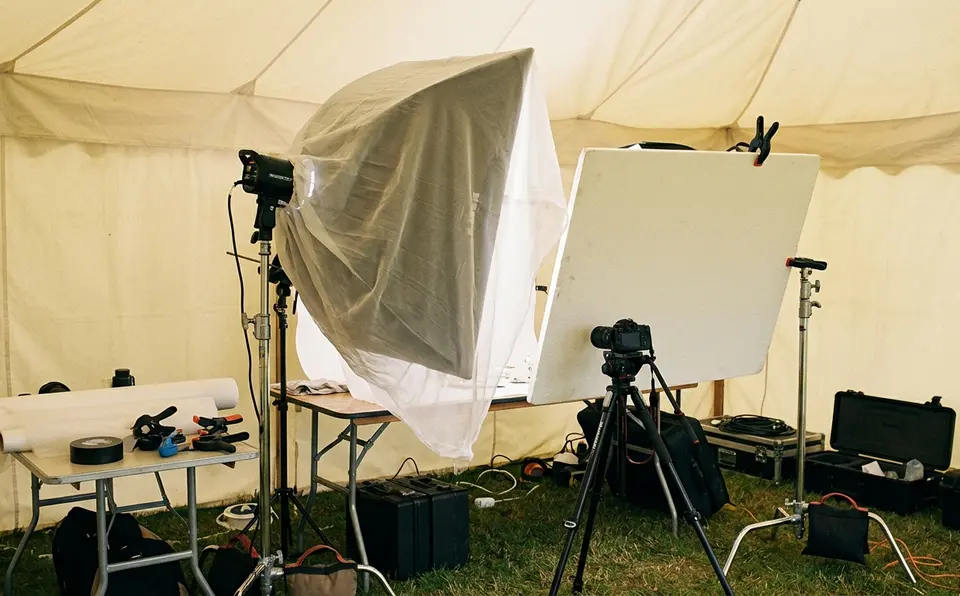
To hold engraving depth on the 1940s sterling cake server under the 4300K cream tent canvas, our lighting assistant positioned a continuous bi-color LED panel at a low 25-degree grazing angle. We dialed the LED color temperature to 3800K to bridge the gap between the warm chandelier glow and the filtered afternoon daylight, feathering the beam through two layers of 1-stop ripstop nylon diffusion. That double-diffused grazing angle skimmed across the surface of the silver, catching the raised edges of the family crest while preserving the dark, oxidized patina inside the recessed metal grooves.
Contrasting Morning Window Light With Evening Flash Ratios
The lighting geometry shifted significantly across the three chronological stages depending on surface reflectivity and ambient luminance:
- Morning North-Facing Window Light (5400K): For the interior hem cameo brooch at 11:15 AM, we worked exclusively with natural 5400K north-facing window light. Using a 100mm f/2.8 macro lens stopped down to f/5.6, the soft, directional daylight wrapped around the curved shell carving without creating pinpoint specular blowouts on the surrounding gold bezel.
- Afternoon Double-Diffused Continuous LED (3800K): Inside the marquee at 4:45 PM, continuous lighting allowed us to visually inspect how the ripstop nylon scrim reflected across the curved sterling blade before triggering the shutter. Moving the scrim three inches closer widened the soft white highlight along the silver bevel while keeping the nearby matte silk ribbon richly saturated.
- Twilight Off-Camera Flash Ratios (1:4): Once evening reception candlelight took over the tablescape and live beeswax tapers were lit, continuous panels were swapped for gridded off-camera strobes. We set our off-camera flash ratio at 1:4 against the ambient beeswax taper candles, preserving delicate specular rim highlights along the vintage champagne coupes and silver server without overpowering the natural flame glow or blowing out the metallic blade.
Build Your Three-Column Heirloom Manifest Thirty Days Before the Rehearsal
The success of the Villanova estate production came down to clear custody records. Following the cake cutting at 8:15 PM, our assistant photographer and the lead wedding planner executed the final sign-off on the printed manifest, confirming that the catering staff had carefully rinsed the 1940s oxidized sterling silver server, dried it with archival cotton, and returned it to the family lockbox before the first reception toast finished. By 8:30 PM, all twelve family artifacts had been photographed in use and secured without a single frayed thread or tarnished linen.
Faith West Manifest ProtocolEvery loose heirloom leaves the lockbox for a maximum of fifteen minutes during daytime staging and returns to locked custody immediately after its functional reception moment concludes.
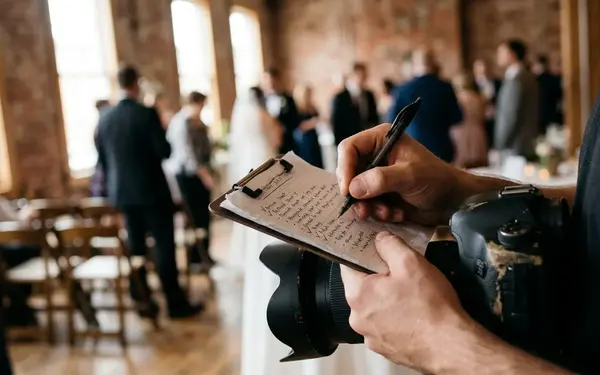
Below is the ledger structure our studio uses to coordinate physical custody between the family curator, the planner's runner, and the camera team:
| Artifact & Material Constraint | Target Architectural / Tablescape Surface | Designated Custodian & Retrieval Window |
|---|---|---|
| 1940s Oxidized Sterling Cake Server (Tarnish transfer risk; high specular reflectivity; unbleached cotton barrier required) | Reception Tent Cake Table (Staged at 4:45 PM with loose garden roses; functional use at 8:15 PM cake cutting) | Bride's Sister / Planner's Assistant (15-minute afternoon staging hold; final catering rinse and lockbox sign-off by 8:30 PM) |
| Unsealed Hand-Dyed Silk Ribbon & 1920s French Lace (Raw fray-prone edges; zero tension or pinning permitted) | Shaded East Terrace Pennsylvania Bluestone Ledge & Oiled Mahogany Library Table | Bride's Sister / Second Photographer (Logged out at 1:30 PM; mandatory handoff back to velvet tray by 1:45 PM) |
| Grandmother's Carved Shell Cameo Brooch (Fragile shell relief; basted into interior bridal gown hem with three-ply cotton thread) | North-Facing Bridal Suite Window (Captured in situ on hanging gown prior to dressing) | Lead Bridal Attendant (Documented between 11:15 AM and 11:30 AM; remains sewn in hem throughout coverage) |
Open a blank document today and build a printed three-column physical manifest for your wedding day—listing each specific family object and its handling limits in column one, its exact architectural or tablescape surface destination in column two, and the designated family custodian with a fifteen-minute retrieval window in column three, then deliver signed copies to your lead photographer, wedding planner, and catering captain thirty days prior to your rehearsal dinner.