Navigating the 1876 Centennial Exhibition Architecture
Successfully photographing a ceremony within the Memorial Hall rotunda requires precise spot metering for mixed light, strategic second-shooter placement, and specific focal lengths to manage the vast marble expanse. The sheer scale of the architecture demands a rigorous technical approach to capture the fleeting, authentic moments that make a wedding day unforgettable. Built for the 1876 Centennial Exhibition, the building features a 150-foot glass dome that acts as a massive, unpredictable light modifier. The intricate Beaux-Arts architectural design creates deep shadowed alcoves that contrast sharply with the brilliantly illuminated center floor.
The massive glass dome and historic design create a late-afternoon sunlight window of circa 40 minutes—a fleeting period where the illumination transforms the space from a bright atrium into a dramatic, high-contrast theater. The core challenge lies in balancing the grand scale of the architecture with the intimate, fast-paced nature of a wedding ceremony. A couple standing beneath the dome occupies a tiny fraction of the frame, yet they must remain the undeniable focal point of the visual narrative. Achieving this balance requires a photography studio to execute a flawless technical strategy while remaining invisible to the guests.
Under Memorial Hall’s Beaux-Arts dome, the contrast against the shadowed alcoves makes spot metering on the couple’s faces essential. Matrix or evaluative metering modes will inevitably underexpose the subjects as the camera attempts to compensate for the brilliant light pouring through the 150-foot glass ceiling. By locking the exposure specifically to the skin tones of the couple, the surrounding marble and architectural details fall into a natural, cinematic shadow that enhances the romantic atmosphere of the vows.
Calibrating Exposure Across Shifting Rotunda Light
As the ceremony progresses, the sun drops behind the dome, initiating a rapid transition from harsh directional sunlight to flat ambient dusk. This environmental shift fundamentally alters the color temperature and intensity of the light within the rotunda. The photography team must manage the color temperature clash between the museum’s tungsten interior lighting, in the vicinity of 3200K, and the fading daylight spilling from the glass ceiling above, circa 6500K. The warm, golden glow of the historic chandeliers competes directly with the cool, blue tones of the twilight sky.
To manage this color temperature clash, the lead photographer manually dials in Kelvin values, shifting incrementally as the ceremony progresses. This continuous calibration ensures that the skin tones remain natural and vibrant, even as the ambient light shifts dramatically from warm to cool. Relying on a continuous on-camera flash to overpower the ambient mix was discarded early on in the development of this venue strategy, as artificial front-lighting flattens the natural grandeur of the venue’s historic lighting and destroys the delicate atmospheric depth of the rotunda.
The rapid-fading light strategy detailed here is strictly bound to late autumn and winter timelines, as summer ceremonies bypass this specific dusk transition entirely. During the colder months, the sun sets directly during the standard ceremony window, creating a highly compressed timeframe for capturing the vows under optimal lighting conditions. The photography team must anticipate the moment the directional sunlight fades, adjusting their exposure settings and white balance in real time without missing an emotional exchange between the couple.
Within the 40-minute late-afternoon sunlight window observed during winter timelines, the technical execution must prioritize ambient light preservation over artificial illumination to maintain the venue’s historic character.
Focal Lengths and Spatial Logistics in the Round
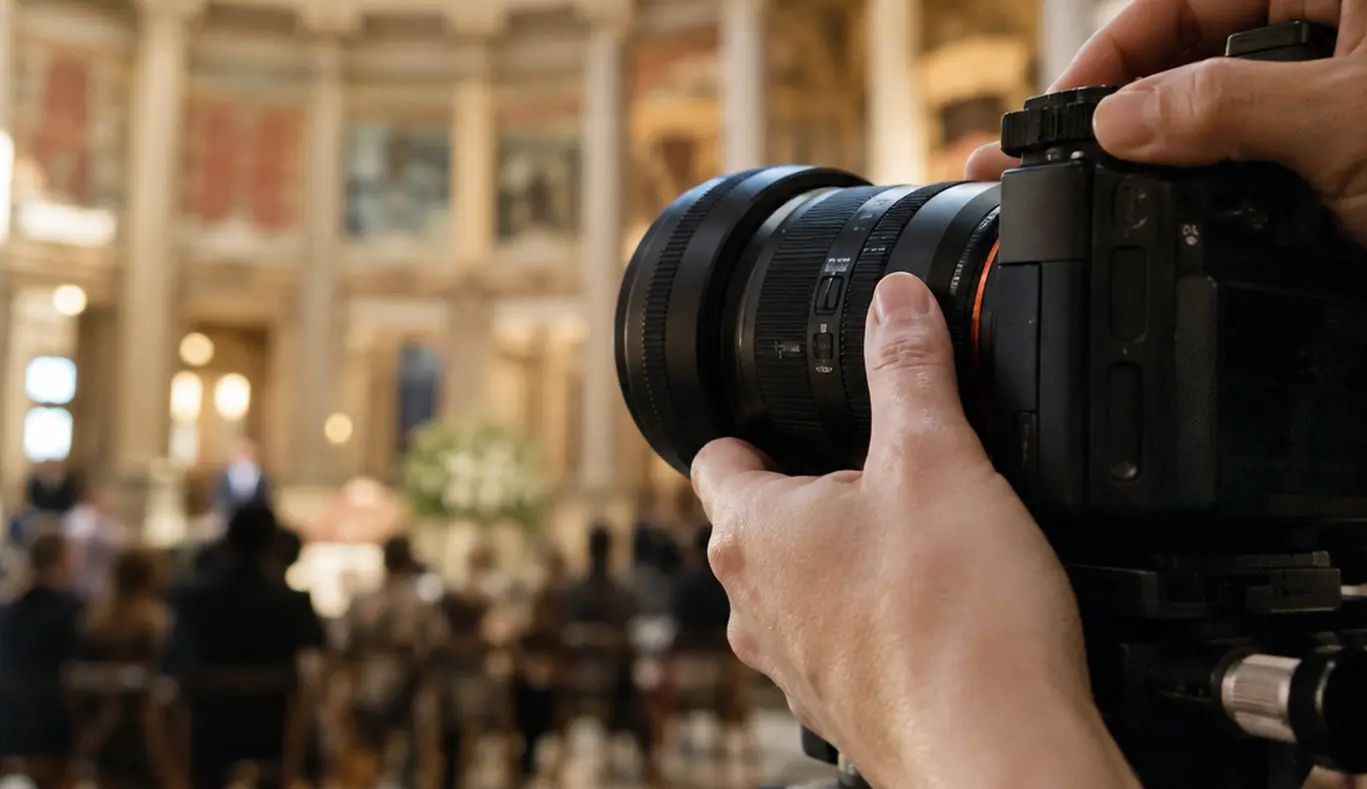
The physical dimensions of the rotunda dictate a highly specific approach to lens selection. A 35mm wide-angle field of view is essential to capture the sheer scale of the rotunda and the architectural context of the venue. This wider perspective allows the photography studio to document the sweeping grandeur of the 150-foot glass dome, the intricate Beaux-Arts detailing, and the collective presence of the gathered guests. The wide-angle lens establishes the setting, grounding the intimate moments of the ceremony within the monumental history of the space.
Conversely, isolating the couple against the visually busy, high-contrast marble background requires tight telephoto lenses. Utilizing 85mm to 135mm telephoto compression allows the photographer to blur the intricate architectural details into a soft, romantic wash of color and light. This optical compression draws the viewer’s eye directly to the emotional connection between the couple, separating them from the expansive environment. The interplay between the 35mm environmental portraits and the 135mm intimate close-ups creates a comprehensive visual narrative of the ceremony.
Mastering the 20-Foot Perimeter
The spatial logistics of the rotunda present a unique challenge for the photography team. The standard setup involves a 20-foot circular ceremony perimeter, with guests seated in a complete ring around the couple. Positioning the second shooter requires mapping the venue’s acoustic and visual sightlines prior to guest arrival. The decision is made to anchor the second shooter at the southern archway, ensuring they can capture wide architectural frames without ever stepping into the tight circular ceremony perimeter—an essential boundary for maintaining the intimacy of the vows.
From this anchored position at the southern archway, the second shooter utilizes telephoto lenses to capture candid guest reactions and alternative angles of the couple. This strategic placement prevents the photography team from cross-shooting or appearing in each other’s frames. The lead photographer, operating within the tight constraints of the inner circle, relies on the second shooter to document the broader context of the celebration while they focus entirely on the couple’s expressions and the exchange of rings.
Synchronizing the 30-Minute Ceremony Block with Sunset
The critical relationship between the venue’s architecture, the time of year, and the resulting photographic approach culminates in the timeline planning. The final timeline is constructed by reverse-engineering the sunset data for the specific wedding date. The photography studio aligns the 30-minute ceremony block with the moment the sun dips below the dome’s western rim. This synchronization avoids blown-out highlights on the polished floor and ensures the couple is bathed in soft, flattering, indirect light during the most important moments of the day.
In late autumn, the polished stone acts as a massive reflector, bouncing the fading daylight back up into the couple’s faces. By timing the ceremony to coincide with the sun dipping below the western rim, the photography team uses this natural reflectance to fill in shadows and create a luminous, ethereal quality to the images. The window of optimal light, on the order of 40 minutes, leaves little room for technical hesitation or repositioning errors.
Every movement, every lens change, and every exposure adjustment must be calculated in advance. The photography team operates with a quiet, deliberate precision, anticipating the shifting light and the emotional beats of the ceremony. The resulting images reflect the unique narrative of the day, capturing the fleeting, authentic moments against the backdrop of historic elegance. Given the rapid light transition beneath the dome, does your current ceremony start time align with the architectural exposure you want to achieve?