Twilight on the Delaware: The Core Plan for Waterfront Portraits
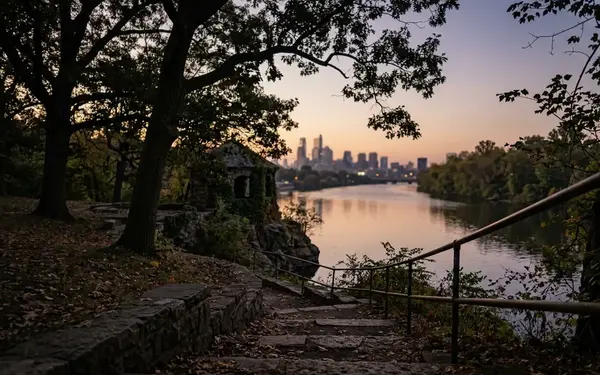
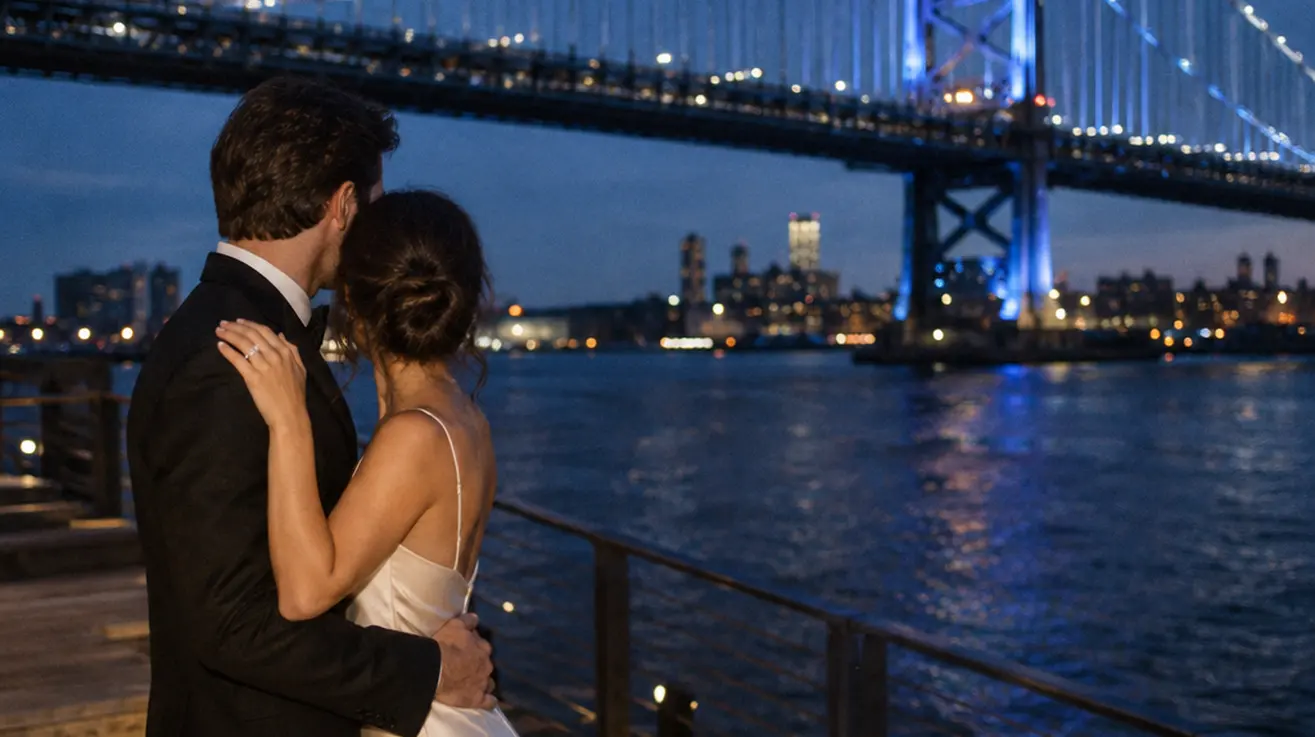
Stand on the lower wooden seating tiers of Race Street Pier just as the sun drops behind the Philadelphia skyline. Above you, the massive suspension cables of the Ben Franklin Bridge flicker to life, casting cold steel reflections across the dark current of the Delaware River. This exact transition is where ordinary waterfront portraits turn into high-drama editorial art.
Pulling off blue hour engagement sessions here demands careful timing. Location scouting suggests that starting at the water's edge and moving west into the historic district preserves ambient background exposure, as the stone alleys hold streetlamp luminance long after the river horizon goes completely black. If you show up expecting casual golden-hour light, the rapid drop in ambient illumination will catch you unprepared.
Waterfront Blue Hour Essentials
- Target the Twilight Window: Allow approximately 24 to 28 minutes immediately following official local sunset for the sweet-spot twilight window.
- Follow the Compact Walking Route: The total walking distance from the lower wooden seating tiers at Race Street Pier to the historic residential blocks west of 2nd Street is around 0.4 miles.
- Pack Dual-Temperature Strobes: Balancing warm incandescent streetlamps and cold architectural bridge LEDs requires gelled off-camera flash paired with deliberate white-balance shifts.
Moving from natural dusk into full artificial night lighting along the riverfront shifts every logistical priority. In open daylight, you hunt for shade; at twilight, you hunt for background luminance and color contrast. You have less than half an hour before the sky behind the bridge loses its rich azure saturation and turns completely black. Every movement from the pier up into Old City must be carefully timed.
Calculating Civil and Nautical Twilight Beneath the Steel Span
Watch a weather app on the afternoon of a shoot, and it will hand you a precise minute for local sunset. Trusting that raw number on the Delaware waterfront will cost you the best light of the evening.
Light-meter readings on the pier helped establish session start times that account for the Center City high-rises to the west, which can block direct solar rays before the astronomical sunset table indicates. While suburban Philadelphia venues still bathe in warm golden sun, Race Street Pier has already slipped into cool, open shade. That early shadow triggers the visual onset of blue hour well before the sun technically crosses the horizon.
Understanding how the sky darkens overhead separates muddy night snapshots from rich editorial portraits. Civil twilight occurs while the sun rests between 0 and 6 degrees below the horizon, followed by nautical twilight between 6 and 12 degrees. During civil twilight, the eastern sky over New Jersey shifts into a luminous pale cobalt that still provides gentle fill light on a couple's faces. Once the sun drops past 6 degrees into nautical twilight, the sky deepens into heavy obsidian, and the bridge's programmable architectural lights become your primary background exposure. During heavy fog or overcast ceilings below 1,500 feet, this cobalt sky transition fails to materialize and the bridge's programmable LED array diffuses into a flat gray haze, requiring a reschedule or a pivot to covered architectural colonnades.
Timing portraits beneath the span also means listening to the tracks above. Eastbound and westbound commuter rail cars cross the bridge's outer tracks every 6 to 12 minutes during early evening hours, throwing an estimated 4-second streak of warm window light across the blue structural steel. Dragging the shutter just as a PATCO train rumbles overhead adds a dynamic gold ribbon right through the upper frame. How do you position your couple so they are ready the exact second those rail cars pass?
| Session Window | Location Stop | Ambient Sky & Light Condition | Camera & Strobe Setup |
|---|---|---|---|
| 15 mins prior to Sunset | Race Street Pier Upper Tier | Skyline blocks direct sun; open shade | Natural ambient light; fast prime lens wide open |
| 0 to +20 mins Post-Sunset | Race Street Pier Lower Promenade | Civil twilight; cobalt sky & bridge LEDs ignite | 3200K–3600K white balance; 1/2 CTO key & rim strobes |
| +20 to +45 mins Post-Sunset | Walkway Approach or N. Front St. | Nautical twilight; deep sapphire to obsidian sky | Wide aperture for city bokeh; elevated diffused key flash |
| +45 to +75 mins Post-Sunset | Elfreth's Alley & Cuthbert St. | Full night; warm incandescent gas-style streetlamps | 1/15-sec rear-curtain sync with 36-inch wedding sparklers |
A Timed Walking Route from Race Street Pier to Old City Alleys
Mapping a route near 0.4 miles sounds effortless until you walk it in formal footwear across uneven Belgian block and brick sidewalks while carrying light stands. Every stop must correspond to the density of the sky.
Phase 1: Sunset to +20 Minutes on Race Street Pier
Begin on the lower promenade of Race Street Pier and the illuminated lawn ramp right at official sunset. Here, the towering masonry anchorage and steel trusses rise directly out of the frame. Because you are shooting within that initial 24-to-28-minute planning window, the sky holds enough ambient light to outline the bridge cables without turning noisy. Shoot low with a wide-angle lens on the tiered steps to build clean silhouettes against the glowing span.
Phase 2: +20 to +45 Minutes on the Bridge Approach or North Front Street
As civil twilight yields to nautical twilight, pack the stands and climb west from the riverfront underpass. Your exact turn depends on the calendar. Always verify the Delaware River Port Authority pedestrian walkway hours before mapping your session, because security gates lock on a strict seasonal schedule. The Delaware River Port Authority closes the pedestrian walkway at 8:00 PM from October 1 through April 30, and at 9:00 PM from May 1 through September 30. In late autumn or winter, an 8:00 PM lockup gives you plenty of time to walk onto the upper pedestrian approach for sweeping views of the suspension cables. If security gates are already closed or winds on the upper span are too fierce, pivot immediately to the cobblestone stretch of North Front Street, where elevated vantage points compress the glowing city grid into soft background bokeh.
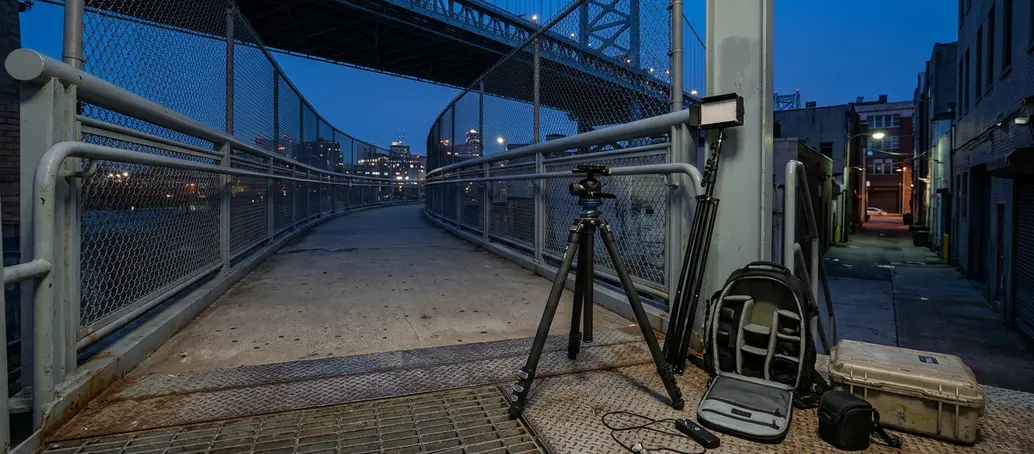
Phase 3: +45 to +75 Minutes in Historic Brick Walkways
Once the river horizon goes pitch black, open water no longer registers on the sensor. Walk west into Old City's narrow residential corridors, specifically Elfreth's Alley and Cuthbert Street. The high brick walls trap the amber glow of incandescent gas-style streetlamps, creating an intimate architectural stage that protects the couple from river gusts and replaces the lost sky exposure with warm colonial texture.
Selecting Fabrics and Silhouettes That Catch Streetlight and Flash
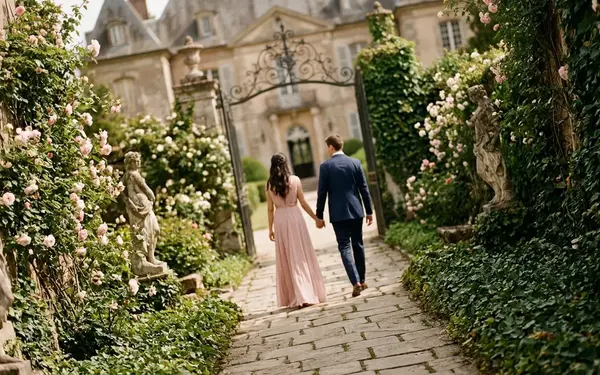
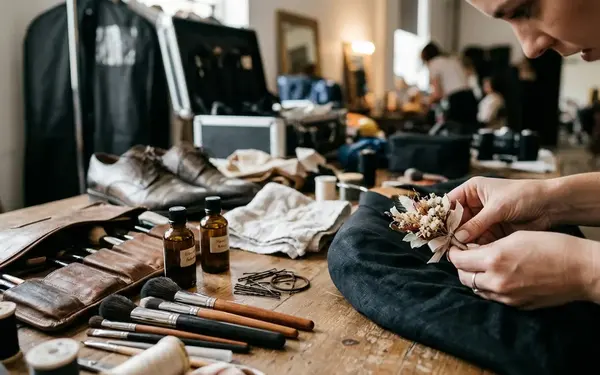
Wardrobe choices that photograph beautifully in a sun-drenched meadow often fall flat under artificial night lighting. Matte chiffon can swallow directional flash against dark water, while heavy silk charmeuse catches it, favoring high-sheen, tightly woven fabrics.
When a directional strobe strikes the couple against a dark river backdrop, the fabric itself must shape the light. Prioritize 400-momme silk satin and dense cotton-backed velvet, which reflect key-light strobes at a 45-degree angle without blowing out highlight detail. Structured tailoring with sharp lapels, heavy silk charmeuse slip gowns, and architectural silhouettes carve out distinct edges against the deep shadows of the pier.
Color palette requires equally high contrast. Navy blue dresses or charcoal suits vanish into the blue-gray steel of the bridge and the dark Delaware tide. Select ivory, champagne, vibrant emerald, or classic black tuxedo wool trimmed with satin lapels to guarantee crisp visual separation from the industrial background.
Account for the waterfront microclimate when styling accessories. Riverfront gusts along the Delaware channel regularly reach 12 to 18 mph at dusk, requiring cathedral-length veils or capes to be weighted at the hem or pinned at two anchor points. Pair those anchored sheer layers with metallic jewelry and structured heels that catch specular highlights from the sodium-vapor streetlights overhead.
Balancing Off-Camera Flash, String Lights, and Sparklers
Using ungelled bare-bulb flashes on the pier can produce a frustrating flaw: cooling the image in post-production to make the couple's skin look natural can turn the bridge's painted steel an unnatural sickly cyan. A dual-temperature lighting approach helps preserve deep sapphire skies straight in camera.
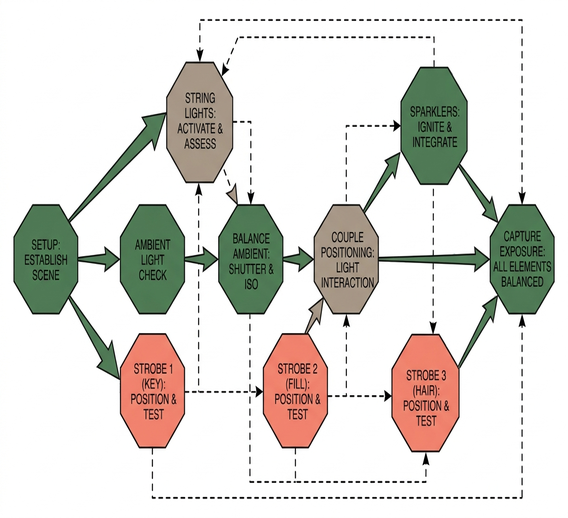
Follow this lighting sequence as you transition from the pier into the alleys:
- Dial Down the Camera Kelvin: Set in-camera white balance between 3200K and 3600K. This forces the ambient twilight sky and the bridge's architectural LEDs into a rich, cinematic cobalt blue.
- Warm the Key and Rim Strobes: Fire your main light through a 24-inch collapsible octabox fitted with a 1/2 CTO warming gel to counteract the cold camera setting and restore warm, natural skin tones. Place a second 1/2 CTO-gelled strobe directly behind the couple, hidden behind their torsos, to carve a golden rim light along their hair and shoulders against the dark water.
- Weave Micro-LEDs for Foreground Bokeh: In the breezy pockets along North Front Street, loose fairy lights tangle instantly. Wrap battery-operated warm micro-LED string lights tightly around a bouquet stem or hold a coiled strand just inches from the lens edge to create warm foreground orbs that balance the background streetlights.
- Drag the Shutter for Steel-Core Sparklers: Once inside the brick corridors of Cuthbert Street, trade standard party sparklers for 36-inch steel-core wedding sparklers, which provide a smokeless 180-second burn duration in typical conditions. Set your camera to a 1/15-second shutter speed using rear-curtain sync. The slow shutter drags the warm magnesium trails into ribbons of gold across the brick, while the rear-curtain flash fires at the very end of the exposure to freeze the couple's expressions with zero motion blur. Always keep a metal bucket of water beside your light stand on the historic brick walkways to douse spent wires immediately.
Why You Should Skip the Outfit Change and Finish at a Classic Old City Bar
Almost every couple asks if they can bring a casual daytime outfit and a formal evening outfit to their waterfront shoot. Refuse the temptation to change clothes mid-session.
Budget 22 to 27 minutes for walking back to Columbus Boulevard parking lots and changing outfits in a vehicle—nearly the entire usable civil twilight phase. When you spend that narrow 24-to-28-minute post-sunset window wrestling with garment bags in the backseat of an SUV, you return to the pier after the sky has already gone pitch black. The cobalt water reflections are gone. So is the glowing horizon.
Commit fully to one high-impact, formal evening look for the entire planned 90-minute route. Take the 25 minutes you budgeted for the parking-lot wardrobe swap and invest it where it actually elevates your gallery: reserve the final 15 minutes of the 90-minute booking for 35mm direct-flash table portraits inside a dim Old City lounge within a two-block radius of 2nd and Market Streets. Slide into a leather booth at an intimate spot like Fork or Panorama, order two martinis, and let direct on-camera flash capture crisp, unposed documentary frames across the table. You get the monumental scale of the Ben Franklin Bridge at blue hour and the intimate editorial energy of a late-night date, without wasting a single second of twilight.