Architecting the Pre-Ceremony Sanctuary: The Seven-Step Protocol
A private first look is a scheduled, pre-ceremony meeting between partners engineered specifically to eliminate bridal party spectators, coordinator interruptions, and intrusive camera angles. Achieving genuine intimacy during real weddings requires treating this moment as a strictly managed acoustic and visual perimeter rather than a theatrical performance. Couples can feel overwhelmed before the ceremony by more than the camera itself. Emotional fatigue can stem from premature social friction: groomsmen filming on mobile phones from hotel balconies, early-arriving relatives wandering into the frame, or production assistants hovering within arm's reach to adjust a veil.
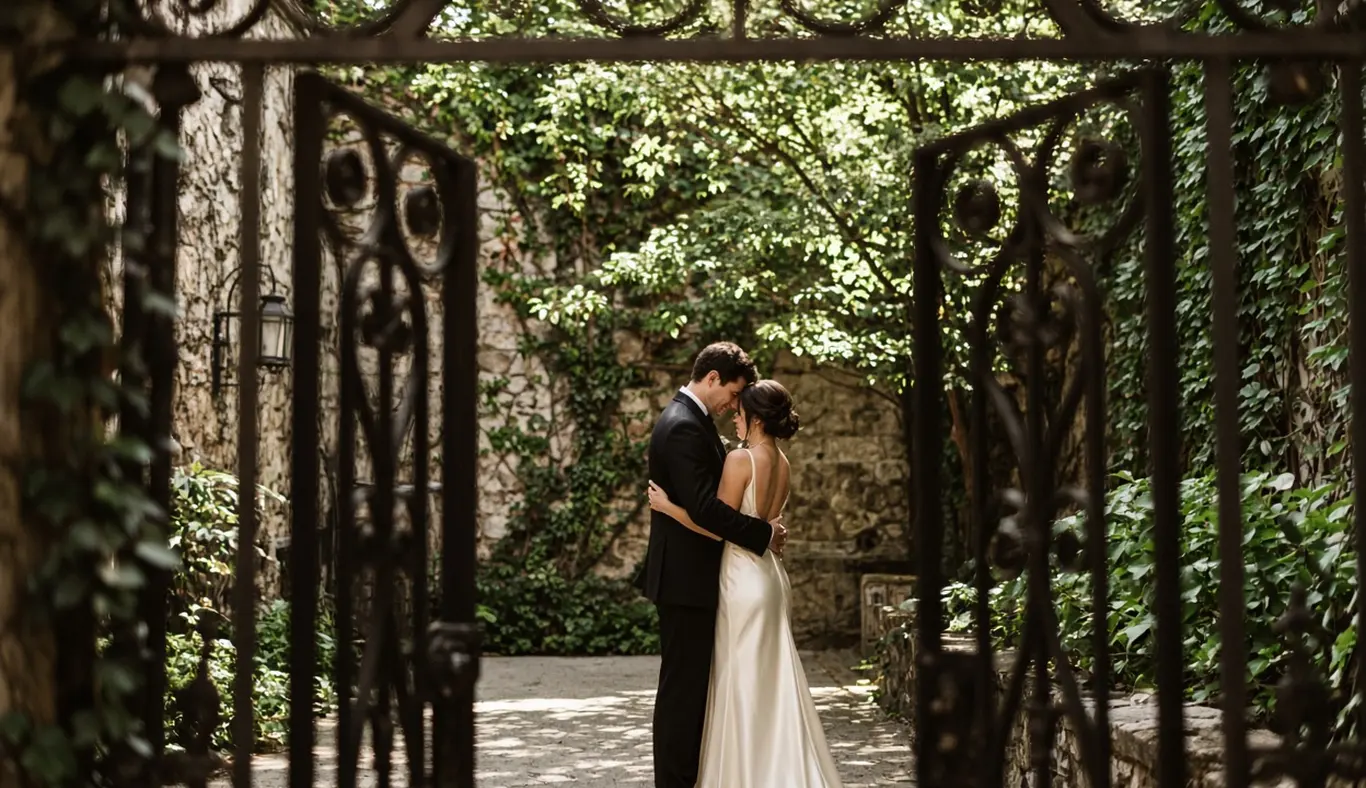
Unstructured pre-ceremony reveals can become public spectacles without clear spatial and temporal boundaries. Establishing an authentic sanctuary requires a dedicated 25-to-35-minute block on the master production schedule prior to any wedding party staging. Furthermore, the environment must maintain a minimum 40-foot clear physical buffer between the couple and any non-essential personnel. By replacing improvised meetings with a disciplined seven-step operational framework, couples and their creative teams can preserve the quiet emotional resonance of the day before the public festivities commence.
- Architectural and botanical scouting: Selecting enclosed urban courtyards or high-hedged estate quadrants that block public sightlines and dampen street acoustics.
- Solar and timeline calibration: Working backward from directional shade windows to conclude dressing early and secure a post-reveal decompression buffer.
- Vendor and family perimeter control: Establishing a sterile transit corridor and holding secondary transport in isolated staging zones.
- Long-lens camera positioning: Deploying telephoto optics and silent electronic shutters at a distance to capture tight expressions without physical intrusion.
- Staggered arrival choreography: Anchoring the stationary partner first and routing the approaching partner through concealed pathways.
- Unscripted acoustic privacy: Abandoning rigid performance prompts in favor of natural verbal greetings and uninterrupted time for private vows.
- Graduated portrait transition: Remaining within the secluded enclosure immediately following the reveal while stepping down to medium focal lengths.
Sightlines and Sound Barriers in Philadelphia Venues and Gardens
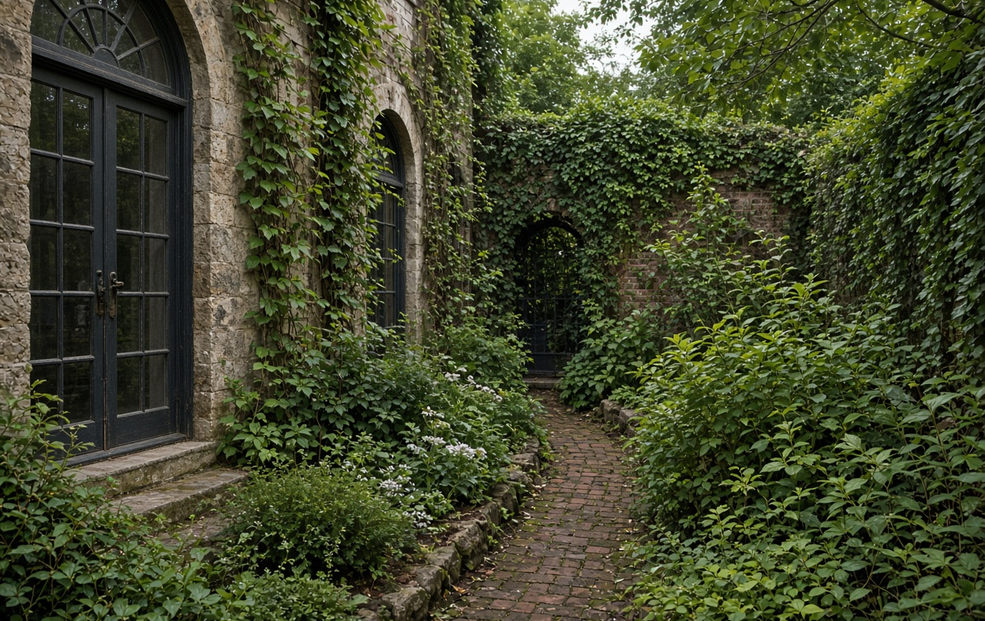
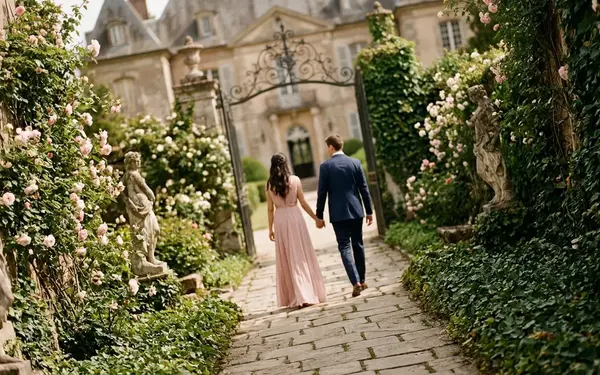
When couples select iconic civic monuments or wide museum steps for their pre-ceremony reveal, they frequently encounter public tour groups, commercial permit bottlenecks, and jarring pedestrian cross-traffic. Moving away from postcard landmarks toward secondary architectural pockets can reduce this exposure. At historic Philadelphia venues, effective location scouting prioritizes sightline blocking and foot-traffic patterns over sweeping panoramic backdrops. Recessed cobblestone courtyards in Old City, narrow brick alleys off residential streets, and private hotel mezzanine levels away from the main lobby provide the structural containment necessary for an undisturbed encounter.
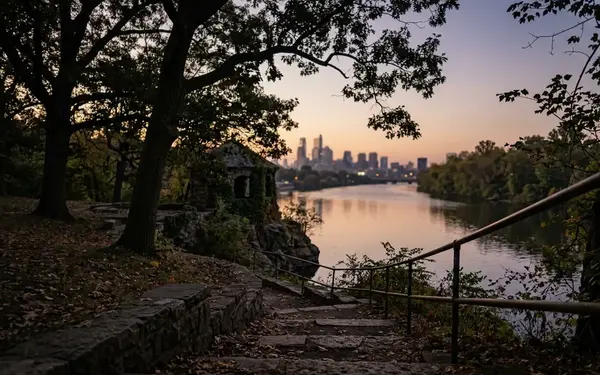
Acoustic isolation is equally vital to visual privacy. Effective sound buffering relies on solid masonry walls or dense evergreen hedges rising at least 7 to 9 feet above street grade to dampen ambient city traffic. On the Main Line and within Fairmount Park, walled estate gardens and sunken botanical quadrants absorb road noise while preventing long-distance visibility from adjacent footpaths. To verify that a chosen pocket remains quiet, scouts conduct on-site walk-throughs on the exact day of the week and within 30 minutes of the planned wedding day window to map pedestrian commuter patterns and delivery schedules.
Public Park Permit Realities
While public walkways in Old City and Center City offer striking historic textures, federal park regulations prohibit roping off pedestrian corridors, meaning total physical exclusion of strangers is only guaranteed on private estate grounds, leased hotel terraces, or dead-end residential courts. Couples planning portraits near federal monuments should review the National Park Service guidelines for Philadelphia historic park permits to understand access boundaries before finalizing their timeline.
Solar Geometry and Timeline Buffers Across Urban Canyons
Consider a late-October celebration in Center City where hair and makeup run twenty minutes behind schedule, pushing the couple into an exposed courtyard at 3:15 PM. During autumn, the usable outdoor natural light window in the Delaware Valley contracts sharply; surrounding high-rises cast multi-block urban canyon shadows that drop ambient light levels, forcing the photography team to rely on high-ISO telephoto stabilization in flat shade rather than warm, directional rim lighting. In contrast, summer timelines face the opposite challenge, where overhead midday sun creates harsh shadows beneath the brow bone unless the couple is tucked beneath dense tree canopies or positioned along east- or west-facing masonry walls that generate clean open shade.
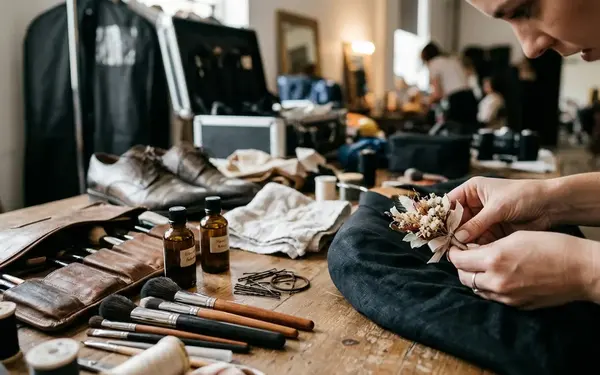
Preventing both lighting failures and chronological rushing requires backward calculation from the exact minute optimal shade forms at the reveal site. Production schedulers mandate that hair, makeup, and structural gown lacing conclude 45 to 60 minutes before the scheduled reveal. This preparatory margin absorbs late-stage garment steaming, boutonniere pinning, and detail photography without encroaching on the couple's private window. Once the reveal concludes, a mandatory 15-minute unscheduled decompression buffer is locked into the master timeline before any family members or wedding party attendants arrive on site. How differently does a ceremony feel when the couple has already spent fifteen unhurried minutes breathing together in the quiet shade?
Sterile Corridors and Staging Zones: Briefing the Planning Team
Even the most secluded garden fails if the bride is accidentally intercepted by early-arriving uncles or catering staff while walking from the dressing suite to the courtyard. Formalizing perimeter control transforms the transit route into a sterile corridor. The wedding planner and the lead photographer's assistant establish physical holding checkpoints connected via two-way radio or direct mobile messaging, ensuring that neither partner moves until the entire path is verified clear.
- Isolated Party Staging: Secondary transport buses, parents, and wedding party members are held in a designated off-site lounge or separate hospitality room for 20 to 30 minutes prior to the reveal.
- Corridor Lockdowns: Venue security and planning staff secure elevator banks, lobby mezzanines, and corridor intersections close to 10 minutes before the stationary partner is walked into position.
- Single-Point Clearance: The photographic assistant stands at the courtyard threshold to visually confirm the absence of hotel guests or tourists, signaling the planner to release the approaching partner only when the perimeter is sealed.
By delegating crowd management entirely to the planning team, the photographers remain focused on optical composition, and the couple avoids the jarring sensation of being watched as they walk toward each other.
Optical Distance and Silent Shutters: Telephoto Camera Blocking
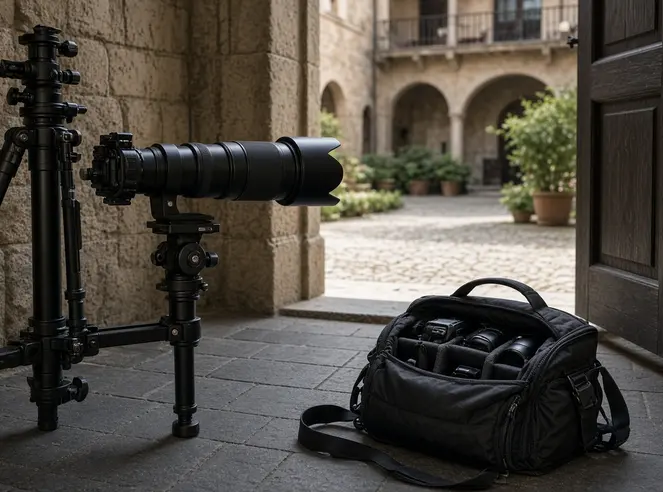
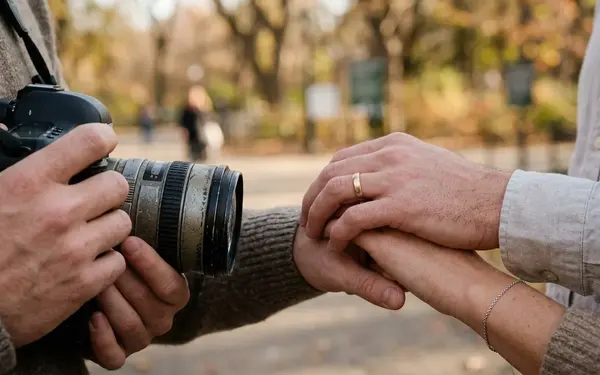
A lens hovering somewhere around three feet from a tearful reaction can alter human behavior. When couples hear the mechanical clatter of a camera shutter or sense an operator circling their perimeter, posture stiffens and private emotion turns into self-conscious performance. Replacing wide-angle proximity with long-lens optical compression gives the couple more space. By mounting 135mm prime or 70-200mm telephoto lenses, the lead and second photographers can anchor themselves in peripheral foliage or architectural alcoves at a physical working distance of 35 to 60 feet. At this range, the optics yield tight, emotive framing of tears and micro-expressions while leaving the couple in complete physical isolation.
Simultaneous dual-angle coverage requires precise geometric calibration. The two photographers establish an approximate 110-to-130-degree cross-shooting axis around the meeting point. This angular range helps avoid two common technical problems: if the operators stand directly opposite one another at 180 degrees, they shoot straight into each other's lenses at a distance in the neighborhood of 50 feet; if they compress their positions below 90 degrees within a narrow Philadelphia courtyard, one partner's face can become obscured during the initial embrace. To complete the sensory barrier, both camera bodies are switched to electronic silent shutter mode, operating at nearly 0 decibels to eliminate mechanical mirror slap. Once the stationary partner is placed, the photography team ceases all verbal direction, relying on pre-arranged visual cues so the couple hears only the ambient breeze and each other's voices.
Staggered Arrival Mechanics and Unscripted Reveal Choreography
Anchoring the Stationary Partner
Staggered movement leaves a 3-to-5-minute gap between anchoring the first partner in the courtyard and releasing the second partner from the holding zone. The stationary partner is positioned first, facing away from the approach path in clean, even light. Before stepping back to the 35-to-60-foot telephoto perimeter, the lead photographer checks that pockets are emptied of mobile phones or keycards and that details—such as floral boutonnieres, pocket squares, and cufflinks—sit cleanly against the tailoring. The approaching partner then follows a concealed route shielded from windows or open lawns, traversing the final 20 to 30 feet completely unassisted after the assistant steps away to remove extraneous footsteps from the acoustic environment.
Abandoning Theatrical Prompts
Reality television tropes often pressure couples into a rigid "tap on the shoulder and spin" routine that feels unnatural in practice. Stripping away those theatrical rules gives couples room for more natural body language, like the relaxed movement encouraged during preliminary engagement sessions. Instead of a choreographed tap, the approaching partner is encouraged to call out their partner's name from ten feet back, for a straightforward setup, or walk directly into a warm embrace. Immediately following the initial greeting, the couple is afforded 5 to 8 minutes of uninterrupted silence to exchange handwritten letters or private vows before either photographer makes eye contact or steps forward.
Stepping Down Focal Lengths and Locking Your Master Timeline
The couple may visibly relax immediately after the reveal concludes. Rather than marching the couple out of the sanctuary toward a secondary location, experienced teams remain within the same secluded courtyard for the opening portrait sequence to preserve that physical ease. As the couple naturally re-engages with the room and initiates conversation with the crew, the photographers gradually shorten their working distance. Switching from long telephoto glass to 50mm or 85mm prime lenses at a 12-to-18-foot working distance allows the team to capture effortless, unposed movement for the initial 10-to-12-minute portrait set while preserving the calm atmosphere established minutes earlier.
Immediate Schedule Adjustment
Securing this level of acoustic and visual privacy requires structural protection on the call sheet long before the wedding week arrives.
Open your current wedding day master timeline right now, identify the 30-minute block immediately preceding your formal portrait hour, and email your wedding planner and lead photographer to lock that window as a closed-set, zero-spectator zone.